
You applied for a loan. Or a credit card. Or maybe you just checked out of curiosity.
And there it was — a number below 700 staring back at you.
A CIBIL score below 700 doesn’t mean you’re bad with money. It means the credit system has recorded something it doesn’t like — a missed payment, a high credit utilisation, an old default, sometimes even an error. And until you fix it, every bank, every lender, and every credit card company will treat you as a risk.
The good news: a CIBIL score below 700 is fixable. Not overnight, but faster than most people think — if you follow the right steps in the right order.
Here’s the exact process.
First, Understand What Your Score Actually Means
Before fixing anything, know where you stand.
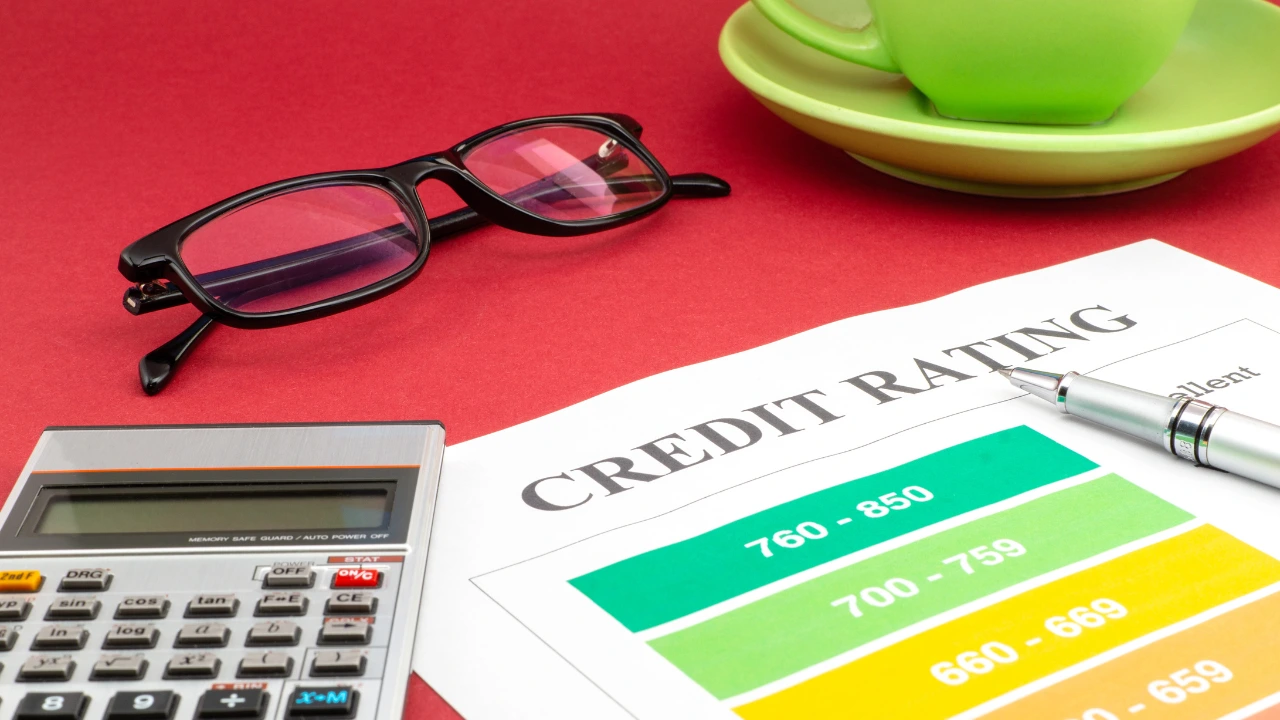
| CIBIL Score Range | Rating | What It Means |
|---|---|---|
| 750 – 900 | Excellent | Best loan rates, instant approvals |
| 700 – 749 | Good | Most loans approved, decent rates |
| 650 – 699 | Fair | Loans are possible, with higher interest rates |
| 600 – 649 | Poor | Limited options, may need a guarantor |
| 300 – 599 | Very Poor | Most applications rejected |
A CIBIL score below 700 puts you in the Fair-to-Poor range. You’re not blacklisted — but you’re paying more for every loan you get, and getting rejected for the better credit products.
The target is 750+. Everything below that costs you money in the form of higher interest rates.
What Actually Causes a CIBIL Score Below 700
Most people don’t know why their score dropped. Here are the real culprits, ranked by how much damage they do:
| Reason | Impact on Score | How Common |
|---|---|---|
| Missed or late EMI/credit card payment | Very High | Extremely common |
| Credit utilisation above 30% | High | Very common |
| Multiple loan/card applications in a short time | Moderate | Common |
| Loan settlement (vs full closure) | Very High | Often misunderstood |
| Error in credit report | Moderate to High | More common than expected |
| No credit history at all | Moderate | First-time borrowers |
| Guarantor on a defaulted loan | High | Rarely known |
The most important thing to understand: a single missed EMI payment can drop your score by 50–100 points and stay on your report for 36 months. One mistake, three years of consequences.
Step-by-Step Fix for a CIBIL Score Below 700
Step 1 — Get Your Full Credit Report (Free)
Don’t just check the score. Get the full report.
You’re entitled to one free CIBIL report per year at cibil.com. You can also check free reports anytime on Paytm, BankBazaar, or Bajaj Finserv apps — these use Experian or Equifax but are equally valid.
Look for:
- Every active and closed loan
- Payment history on each account
- Any account marked “Settled,” “Written Off,” or “Overdue”
- Enquiries made by banks in the last 24 months
This report is your diagnosis. You cannot fix a CIBIL score below 700 without knowing exactly what’s pulling it down.
Step 2 — Dispute Any Errors Immediately
This is the fastest way to move a CIBIL score below 700 upward — and the most overlooked.
Studies suggest nearly 20–25% of Indian credit reports contain at least one error. Common errors include:
| Error Type | What to Do |
|---|---|
| Loan shown as active but already closed | Raise a dispute on the CIBIL website |
| Payment shown as missed, but you have proof | Submit a bank statement as evidence |
| Loan you never took (identity issue) | Report to CIBIL + file a police complaint |
| Wrong personal details affecting matches | Submit the correction form with KYC |
Disputes are raised at cibil.com/disputes. Resolution takes 30 days by regulation. If the error is confirmed and corrected, your score can jump 30–80 points without changing any financial behaviour.
Do this first. Before anything else.
Step 3 — Clear All Overdue Amounts
If you have any missed payments, EMI bounces, or overdue credit card bills — clear them now. Every single one.
A CIBIL score below 700 caused by active overdues will not improve until those overdues are paid. The account status changes from “Overdue” to “Current” only after payment, and that update reflects in your next report cycle (usually 30–45 days).
Priority order for clearing:
| Priority | Account Type | Why |
|---|---|---|
| 1st | Credit card overdue | Highest interest, fastest score impact |
| 2nd | Personal loan EMI missed | Unsecured lenders watch this closely |
| 3rd | Home/auto loan EMI | Secured, but still damages score heavily |
| 4th | Any “Settled” accounts | Try to convert to “Closed” by paying the remaining |
One important distinction: Settled is not the same as Closed. If you negotiated a lower payoff with a bank and they marked it “Settled,” that flag stays on your report and actively suppresses your score. Contact the lender and pay the remaining balance to convert it to “Closed.” This one step alone has moved CIBIL scores below 700 up by 40–60 points for many borrowers.
Step 4 — Bring Credit Utilisation Below 30%
Credit utilisation is how much of your available credit limit you’re using. It is the second biggest factor in your score after payment history.
| Credit Limit | Amount Used | Utilisation | Impact on Score |
|---|---|---|---|
| ₹1,00,000 | ₹85,000 | 85% | Severely negative |
| ₹1,00,000 | ₹50,000 | 50% | Negative |
| ₹1,00,000 | ₹30,000 | 30% | Neutral |
| ₹1,00,000 | ₹15,000 | 15% | Positive |
| ₹1,00,000 | ₹5,000 | 5% | Very Positive |
If your credit card balance is consistently above 30% of your limit, your score suffers every single month, regardless of whether you pay on time.
Two ways to fix this fast:
- Pay down the outstanding balance below 30% of your limit
- Request a credit limit increase from your bank (without spending more)
Both reduce your utilisation ratio and directly address a CIBIL score below 700 caused by high card usage.
Step 5 — Stop Applying for New Credit
Every time you apply for a loan or credit card, the lender makes a hard inquiry on your credit report. Each hard enquiry drops your score by 5–10 points and stays visible for 24 months.
If you’ve applied to 4–5 banks in the last few months, trying to get approved despite a CIBIL score below 700, those rejections plus enquiries are making the problem worse. Stop all applications for at least 6 months while you repair.
Step 6 — Build Positive History With a Secured Credit Card
Once overdues are cleared and utilisation is under control, you need a positive payment history going forward. The fastest legal way to build this is a secured credit card.
| Feature | Secured Credit Card |
|---|---|
| How it works | You deposit ₹10,000–20,000 as collateral |
| Credit limit given | Equal to your deposit |
| Reports to CIBIL | Yes, monthly |
| Interest rate | Standard (36–40% annualised if unpaid) |
| Who offers it | SBI, Axis, HDFC, Kotak |
Use it for one small purchase per month — a grocery bill, a mobile recharge. Pay the full amount before the due date every month. Each on-time payment gets reported to CIBIL and slowly rebuilds a positive history for a score that was below 700.
Realistic Timeline to Recover From a CIBIL Score Below 700
| Action Taken | Score Impact | Timeline |
|---|---|---|
| Error dispute resolved | +30 to +80 points | 30–45 days |
| Overdue cleared | +20 to +50 points | 30–45 days |
| Utilisation brought under 30% | +20 to +40 points | 30–60 days |
| Settled account converted to Closed | +40 to +60 points | 45–60 days |
| 6 months of on-time payments | +30 to +60 points | 6 months |
| 12 months of consistent good behaviour | +60 to +100 points | 12 months |
Most people with a CIBIL score below 700 who follow all six steps consistently reach 720–750 within 6–9 months. Reaching 750+ from a very poor score (below 600) takes 12–18 months of clean behaviour.
Frequently Asked Questions
Q: How long does it take to fix a CIBIL score below 700?
- Depends on the cause. If errors are involved, disputes are resolved in 30 days, and scores can jump significantly. For payment history issues, consistent on-time payments for 6–12 months typically move a CIBIL score below 700 into the 720–750 range. Full recovery to 750+ from a very damaged score takes 12–18 months.
Q: Can I get a loan with a CIBIL score below 700?
- Yes, but on worse terms. NBFCs and some private lenders approve loans for scores between 650 and 699 at higher interest rates. Below 650, your options narrow significantly. Fixing the score first — even partially — saves more money in interest than the time spent repairing it.
Q: Does checking my own CIBIL score reduce it?
- No. Checking your own score is a soft enquiry and has zero impact on your score. Only hard enquiries — made by lenders when you apply for credit — reduce your score. Check your own report as often as you need to.
Q: If I pay a settled account in full, will it immediately improve my score?
- The lender updates your account status to “Closed” after receiving full payment, typically within 30–45 days. Once updated, CIBIL reflects the change in your next report cycle. The improvement isn’t instant but is significant — one of the highest-impact single actions for a CIBIL score below 700.
Q: Will a CIBIL score below 700 affect my job application?
- Some employers — particularly in banking, finance, and senior roles — run credit checks as part of background verification. A very poor score (below 600) has reportedly affected hiring decisions in the BFSI sector. This is another reason to treat your credit score as seriously as your resume.

Abhishek Kandir is the founder and lead writer at Paisewaise, a personal
finance publication covering Indian markets, budgeting, and investing since 2023.
Abhishek’s work focuses on making complex financial topics — from RBI
Interventions to SIP strategies — understandable for everyday Indian readers
without a financial background.