
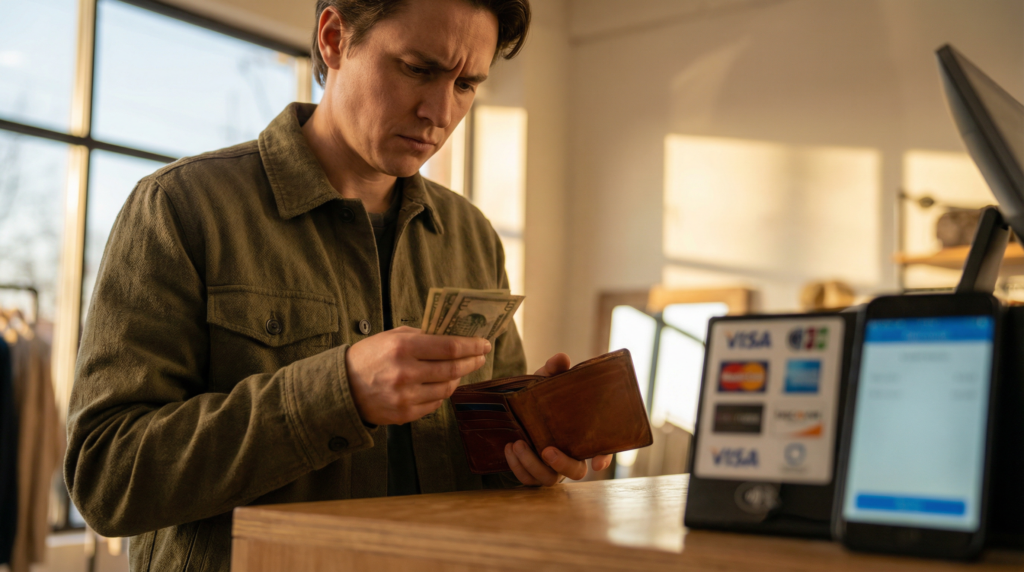
Living on Cash Only for 30 Days: Here’s What Changed
What if every swipe, tap, and scan disappeared overnight?
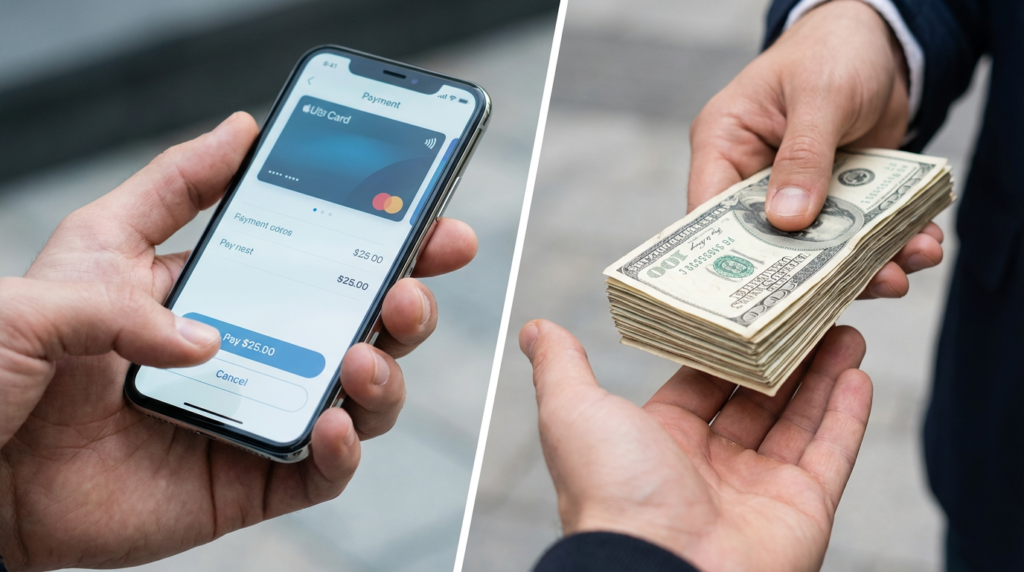
For most of us, spending money has become invisible. A quick tap of our phone at the coffee shop. An auto-debit for streaming services we forgot we had. Online shopping is completed in three clicks while lying in bed. Digital payments have made spending so effortless that money seems to evaporate from our accounts like steam—present one moment, gone the next, leaving barely a trace of where it went.
I decided to fight back against this financial fog with a radical experiment: living on cash only for 30 days in our aggressively digital world. No cards. No apps. No contactless payments. Just physical money that I could see, touch, and watch disappear with every purchase.
What I discovered wasn’t just about dollars and cents—it was about the invisible psychology driving my spending decisions every single day.
Why I Tried Living on Cash Only
The question haunting me was simple but urgent: What does this experiment reveal about hidden spending leaks?
I wasn’t in a financial crisis. My bills were paid, and I had savings. But something felt off. Every month, I’d check my bank account with the same confused expression: “Where did all that money go?” The budgeting apps I’d downloaded with good intentions sat unopened on my phone, their notifications ignored like missed calls from my dentist.
Digital payments had removed every last shred of friction from spending. There was no pause, no consideration, no moment of “Do I really need this?” It was just tap, spend, done. Those $4 coffees, $12 lunches, $8 impulse buys at the checkout line—they added up to hundreds of dollars I couldn’t account for.
My motivation was clear: regain control, test my discipline, and expose those leaks once and for all. I expected to feel restricted and annoyed. What I got was far more interesting.
What Surprised Me Most About My Spending Habits
What surprised me most wasn’t how much I spent—it was how differently I felt about every single purchase.
The Physical Reality Check
Watching cash physically decrease in my wallet created an emotional response I’d never experienced with digital payments. On Day 3, I opened my wallet to find it noticeably thinner than the morning before. That visual shock made me pause before my next purchase in a way that a declining number in an app never had.
Living on cash only forced me to confront a truth: I’d been treating digital money like Monopoly money—abstract, not quite real.
Unexpected Behavioral Shifts:
- The “No” Muscle Got Stronger: At a bookstore on Day 7, I picked up three books. With only $40 in my wallet and groceries still to buy, I actually put two back. With a card, I would’ve bought all three without thinking.
- The 24-Hour Rule Became Automatic: Because I couldn’t make impulse purchases online, I’d write down items I wanted. By the next day, I’d forgotten about half of them—purchases that would have happened instantly with saved card details.
- Small Purchases Became Visible: That daily energy drink from the convenience store? When it meant breaking a $20 bill and getting back crumpled singles, it suddenly seemed worth reconsidering.
The discover angle here is undeniable: our brains process physical and digital money completely differently, even though logically we know they’re the same.
Did I Actually Spend Less Overall?
The numbers told a story I didn’t expect.
Month-by-Month Comparison
| Spending Category | Previous Month (Digital) | Cash-Only Month | Difference |
|---|---|---|---|
| Groceries | $380 | $340 | -$40 (-11%) |
| Dining Out | $285 | $160 | -$125 (-44%) |
| Coffee Shops | $92 | $28 | -$64 (-70%) |
| Impulse Purchases | $147 | $35 | -$112 (-76%) |
| Entertainment | $65 | $45 | -$20 (-31%) |
| TOTAL | $969 | $608 | -$361 (-37%) |
I spent 37% less during my cash-only month—over $360 in savings—without making a single sacrifice that actually mattered to my quality of life.
What Changed the Most
Dining out and impulse purchases saw the biggest drops. Why? These categories represented convenience spending and boredom buying—the exact areas where digital payments had eliminated all friction. When I had to think, “Do I have enough cash for this?” the answer was often “Yes, but I’d rather save it for something better.”
The clear takeaway: Awareness beats budgeting apps. I’d tried three different budgeting apps over the previous year, meticulously categorizing expenses for about two weeks each time before abandoning them. But living on cash only created automatic, unavoidable awareness with every transaction.
The Emotional Side of Paying With Cash
Handing over physical cash triggered emotions I’d completely forgotten existed.
The Pain of Paying
Behavioral economists call it the “pain of paying”—the psychological discomfort we feel when parting with money. Digital payments have systematically eliminated this feeling, making spending nearly painless. Cash brought it roaring back.
Emotional reactions I noticed:
- Hesitation Before Purchases: At checkout, I’d often pause with the cash in my hand, reconsidering. That two-second hesitation never happened when tapping my phone.
- Feeling the “Loss”: Watching a $20 bill leave my hand created a sense of loss that swiping a card never did. Even though the amount was identical, the experience was completely different.
- Regret Hit Faster: When a purchase didn’t meet expectations, I’d think “I wasted $15” with genuine frustration. Digital purchases I regretted got mentally filed away and forgotten.
- Pride in Saving: Turning down purchases felt like a win because I could see the money still in my wallet. With digital payments, money not spent felt invisible—neither a win nor a loss, just… nothing.
Why this matters for Discover readers: Understanding that our payment method directly influences our emotions explains so much about why we overspend. It’s not about lack of willpower—it’s about fighting against a system designed to make spending feel effortless and emotionless.
Where Cash-Only Living Became Difficult
Reality check: Living on cash only in 2026 is choosing hard mode for daily life.
The Biggest Inconveniences
Online Services Were Impossible
My gym membership, Netflix, Spotify, and cloud storage—all require digital payment. I had to use my debit card for these, technically breaking my rules, but accepting that some modern services simply don’t accept cash.
Emergency Situations
On Day 16, my car needed an unexpected repair. The shop accepted cash, but I’d have to drive to an ATM, withdraw the maximum daily limit, return the next day for more cash, and handle a large amount of physical money. It was doable but anxiety-inducing.
Where Cash Simply Wasn’t Accepted:
- Online shopping (obviously)
- Parking meters in newer areas (app-only)
- Food delivery services
- Ride-sharing apps
- Some small trendy cafes (“Card only, sorry”)
- Hotel deposits
- Rental car reservations
Social Situations Got Awkward
When splitting restaurant bills, I was the person creating complications. “Can you just Venmo me your part?” friends would ask. “I only have cash” became my awkward refrain. Some friends were cool about it; others clearly found it annoying.
The ATM Fee Trap
I had to plan which ATMs to use carefully. My bank had limited locations, and using out-of-network ATMs meant $3-5 fees that ironically made my money-saving experiment cost more money.
Balanced Reality
Living on cash only isn’t a perfect solution—it’s a tool for revealing spending patterns. The inconveniences are real and in some cases, unavoidable. The point isn’t to abandon digital payments forever; it’s to understand how they affect our behavior.
How It Changed My Lifestyle & Social Habits
Money doesn’t just affect what we buy—it shapes how we live.
Fewer Impulse Outings
“Want to grab drinks after work?” used to be an automatic yes. During the cash-only month, it became “Let me check my wallet.” This pause made me realize how many outings were driven by boredom or FOMO rather than a genuine desire to socialize.
Unexpected lifestyle changes:
- I Cooked 23 Out of 30 Dinners: Previously, I’d averaged maybe 15 home-cooked meals per month. Running to the ATM for cash to order takeout felt like too much effort most nights.
- Weekend Plans Required Actual Planning: Spontaneous Target runs didn’t happen. If I wanted to go shopping, I needed to withdraw cash first, which created natural friction.
- Coffee at Home Became the Default: My expensive latte habit dropped from 5x per week to 2x per week simply because I didn’t want to break a large bill for a small purchase.
More Intentional Spending vs. Constant Restriction
Did I feel more in control—or more restricted? Honestly, both.
The control felt empowering: Knowing exactly how much money I had available and watching myself stick to limits built confidence I hadn’t felt in years.
The restriction occasionally chafed: There were moments when I wanted something and had the money (digitally) but not the cash, and it felt arbitrarily limiting.
The sweet spot, I realized, wasn’t all-or-nothing. It was intentionality—bringing the awareness cash created into all my spending decisions.
Cash vs Digital Payments: Which Actually Helps You Save?
The answer might surprise you—it’s not about the tool; it’s about the behavior.
Pros of Cash
| Advantage | Why It Matters |
|---|---|
| Physical Visibility | You can literally see your money decreasing |
| Natural Spending Limits | When the cash runs out, spending stops |
| Psychological Pain | Handing over cash creates emotional awareness |
| No Tracking Required | Your wallet balance is your budget |
| Privacy | Cash transactions don’t create data trails |
Pros of Digital Payments
| Advantage | Why It Matters |
|---|---|
| Convenience | Accepted everywhere, online and offline |
| Automatic Records | Every transaction is logged |
| Rewards & Cashback | Many cards offer 1-5% back on purchases |
| Safety | Lost cards can be canceled; lost cash is gone forever |
| Emergency Access | No daily ATM withdrawal limits |
The Real Issue: Behavior, Not Tools
Here’s the uncomfortable truth: Both cash and digital payments can work—or fail—depending on your relationship with money.
Cash helps you save IF:
- You struggle with impulse purchases
- You find budgeting apps overwhelming
- You need to “feel” spending to control it
- You want to limit spending in specific categories
Digital payments help you save IF:
- You actively track spending
- You use rewards strategically
- You have strong self-control
- You utilize automatic savings transfers
Living on cash only revealed that I’d been using digital payment convenience as an excuse to avoid facing my spending habits. The moment I had to confront every purchase decision consciously, my behavior changed—not because cash is magic, but because visibility forced accountability.
Lessons I’m Keeping After the 30 Days
What money habits will stick after the experiment ends?
I’m not staying 100% cash-only—that would be impractical and unnecessarily rigid. But I’m not going back to mindless digital spending either. Here’s my hybrid approach:
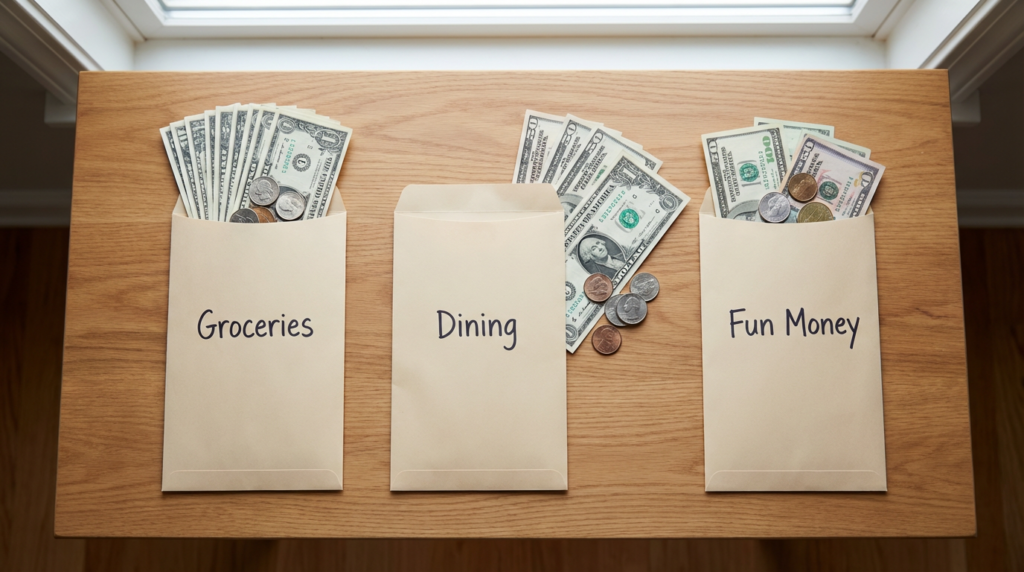
The Cash Envelope System (Modified)
Weekly cash allocation for variable expenses:
- $80 for groceries
- $40 for dining out/coffee
- $30 for entertainment/miscellaneous
Fixed bills and subscriptions stay on autopay (digital), but discretionary spending happens with cash. When the envelope is empty, I wait until next week.
Digital Payments with New Rules
Before any online purchase over $25:
- Add item to cart
- Wait 24 hours
- If I still want it, buy it
This recreates the friction that cash provided without the inconvenience of avoiding online shopping entirely.
The “Cash Test” for New Subscriptions
Before adding any new subscription, I ask: “Would I walk to an ATM, withdraw cash, and hand it to someone every month for this?” If not, I don’t subscribe.
Weekly Cash Withdrawals Only
Instead of using my debit card freely, I withdraw my weekly budget every Monday. This creates the same visibility as cash provided without carrying large amounts.
Who Should Try a Cash-Only Challenge?
Would I recommend living on cash only to others? Yes—but not to everyone.
Who Would Benefit Most:
Overspenders Who Don’t Know Where Money Goes
If you frequently experience “surprise” when checking your account balance, a cash-only challenge will illuminate your spending patterns faster than any app.
Budget Beginners Overwhelmed by Apps
If you’ve tried and abandoned multiple budgeting tools, cash provides the simplest possible system: when it’s gone, it’s gone.
Anyone Trying to Break Specific Bad Habits
Compulsive online shopper? Daily latte addict? DoorDash dependent? Cash creates immediate friction in exactly these areas.
People Seeking a Financial “Reset”
Sometimes you need to disrupt patterns completely to see them clearly. Living on cash only is like a financial detox—extreme, temporary, and revealing.
Who Might Struggle:
- People whose work requires frequent online purchases
- Parents managing multiple kids’ activities and expenses
- Anyone living in areas where cash isn’t widely accepted
- Individuals who’ve already mastered mindful digital spending
Recommended Approach for Beginners
Don’t start with 30 days. Try this progression:
- Week 1: Cash for one category (coffee/lunch)
- Week 2: Cash for all food purchases
- Week 3: Cash for all discretionary spending
- Week 4+: Full cash-only if you’re ready
Final Verdict: Is Living Cash-Only Worth It?
What does this experiment reveal about modern consumer behavior?
Living on cash only for 30 days taught me something crucial: The ease of digital payments isn’t the problem—our lack of awareness is.
Cash didn’t magically make me a better person with money. It simply forced me to pay attention. Every purchase required a conscious decision. Every dollar spent was visible and real. The friction I’d been avoiding with digital convenience turned out to be exactly the friction I needed.
Digital payments hide the truth. They make $5 and $50 feel equally painless. They let us spend money we can’t see on things we barely remember.
Cash exposes the truth. It makes every purchase decision tangible. It creates natural boundaries. It forces us to prioritize.
But here’s the twist: You don’t need to live cash-only forever to gain these benefits. The real solution is intentional spending—bringing the awareness and deliberation that cash creates into every payment method you use.
I saved $361 in one month, not because cash is superior to cards, but because cash forced me to confront my spending habits. Now, armed with that awareness, I can make intentional choices regardless of payment method.
The experiment was worth every awkward moment, every inconvenient ATM trip, and every “Sorry, I only have cash” conversation. It reset my relationship with money in a way no budgeting app ever could.
Would You Try It?
The 7-Day Cash-Only Challenge Starter Kit:
What you’ll need:
- ✓ Estimated weekly discretionary spending amount
- ✓ Envelope or wallet divider
- ✓ Notebook to track observations
- ✓ Backup plan for emergencies
Rules:
- Withdraw one week of spending money on Day 1
- Use cash for all non-fixed expenses (groceries, dining, entertainment)
- When cash runs out, spending stops until next week
- Note emotional reactions and spending triggers
- Track which purchases you avoided or delayed
The big question: Would you try a 7-day or 30-day cash-only challenge?
If the idea makes you nervous or resistant, that might be the best reason to try it. Our strongest reactions often point to our biggest growth opportunities.
Living on cash only isn’t about restriction—it’s about revelation. And that revelation just might change how you think about money forever.
FAQs
Q. Does living on cash only really help you save money?
- Yes. Using physical cash increases awareness of spending and reduces impulse purchases by adding friction to every transaction.
Q. Is a cash-only lifestyle practical in today’s digital world?
- Not fully. While it improves discipline, a hybrid approach—cash for daily expenses and digital for bills—is more realistic.
Q. What are the biggest downsides of living on cash only?
- Limited acceptance for online payments, safety concerns, and difficulty managing subscriptions are the main challenges.
Q. Who should try a cash-only spending challenge?
- People who overspend digitally, struggle with budgeting, or want a financial reset benefit the most.
Q. How long should a cash-only challenge last?
- Even 7–14 days can create awareness, but 30 days is ideal for building lasting habits.

Owner of Paisewaise
I’m a friendly finance expert who helps people manage money wisely. I explain budgeting, earning, and investing in a clear, easy-to-understand way.