
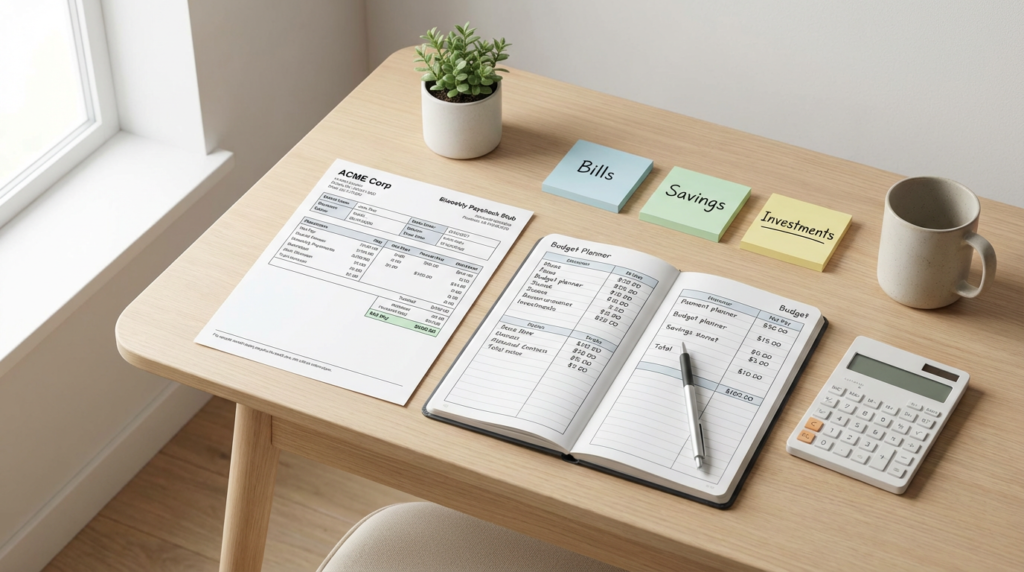
How to Budget with Biweekly Paychecks: A Simple Step-by-Step Plan
Last Updated: March 2026 | Read Time: ~7 minutes
Introduction
If you get paid every two weeks, you already know the math doesn’t always feel clean. Some months, you receive two paychecks. Other months, three arrive. Bills land on random dates. Rent is due on the 1st, but your paycheck hits on the 7th. It can feel like you’re constantly playing catch-up.
Learning how to budget with biweekly paychecks is one of the highest-leverage financial skills you can build. Unlike monthly budgeting, a biweekly budgeting strategy requires you to think in 26 pay periods per year — not 12 months — and that single shift changes everything. This guide walks you through a clear, step-by-step plan to align your income with your expenses, build a cushion, and stop feeling financially anxious mid-month.
Understanding the Biweekly Pay Cycle
Before building your budget, you need to understand what “biweekly” actually means mathematically.
- You receive 26 paychecks per year (not 24, which would be semi-monthly)
- In 10 out of 12 months, you receive 2 paychecks
- In 2 months per year, you receive 3 paychecks — this is a critical opportunity
Many people treat biweekly pay like monthly pay and wonder why their budget breaks down. The reality is that managing expenses on biweekly income requires a slightly different framework — one that works with your pay cycle, not against it.
Step-by-Step Biweekly Budgeting Strategy
Step 1 — Calculate Your Real Monthly Take-Home
Start with your per-paycheck net income (after taxes, insurance, 401k).
| Scenario | Per Paycheck | Monthly Estimate (×2) | Annual (×26) |
|---|---|---|---|
| Entry-level earner | $1,400 | $2,800 | $36,400 |
| Mid-level earner | $2,200 | $4,400 | $57,200 |
| Dual-income household | $4,000 | $8,000 | $104,000 |
Step 2 — List All Monthly Fixed Expenses
Write down every recurring, predictable expense:
- Rent or mortgage
- Car payment
- Insurance premiums
- Subscriptions (streaming, gym, software)
- Minimum debt payments
- Phone bill
Then total them up. This is your non-negotiable floor — the minimum your budget must cover every month.
Step 3 — Assign Bills to Specific Paychecks
This is the core of budgeting when paid every two weeks. Instead of thinking monthly, assign each bill to Paycheck 1 or Paycheck 2 of the month.
Example — Maria, 29, earns $2,100 per paycheck (net):
| Bill | Amount | Assigned To |
|---|---|---|
| Rent | $1,100 | Paycheck 1 (1st of the month) |
| Utilities + Internet | $180 | Paycheck 1 |
| Groceries | $350 | Paycheck 2 |
| Car insurance | $120 | Paycheck 2 |
| Subscriptions | $75 | Paycheck 2 |
| Gas / Transport | $150 | Split: $75 each paycheck |
| Savings transfer | $200 | Paycheck 2 |
| Total | $2,175 |
Maria’s budget is tight on Paycheck 1 (rent-heavy) but comfortable on Paycheck 2. By aligning bills with her biweekly pay schedule, she never misses a payment — even though rent lands right at the start of the month.
Step 4 — Build Variable Expense Buckets
Beyond fixed bills, you need to plan for spending that fluctuates:
- Groceries — estimate based on last 2 months of spending
- Dining out — set a cap, not a hope
- Clothing / personal care — often undercounted
- Entertainment — assign a number before the month starts
A practical approach: use the 50/30/20 framework adapted for biweekly income:
| Category | % of Take-Home | Example ($4,400/month) |
|---|---|---|
| Needs (rent, bills, food) | 50% | $2,200 |
| Wants (dining, hobbies) | 30% | $1,320 |
| Savings + Debt payoff | 20% | $880 |
Step 5 — Set Up Sinking Funds for Irregular Expenses
This is where most biweekly budgeters fail. They budget for monthly bills but forget about irregular ones.
Sinking funds for irregular expenses are small savings buckets you contribute to every paycheck, so when a big expense arrives, the money is already sitting there.
Common sinking fund categories:
- Car maintenance — tires, oil changes, registration
- Medical/dental — copays, prescriptions, annual checkups
- Holiday gifts — spread the December crunch across the year
- Travel/vacation — avoids credit card reliance
- Home repairs — especially for homeowners
How to calculate a sinking fund contribution:
Annual estimated cost ÷ 26 paychecks = contribution per paycheck
| Sinking Fund | Estimated Annual Cost | Per Paycheck Contribution |
|---|---|---|
| Car maintenance | $600 | $23.08 |
| Medical | $400 | $15.38 |
| Holiday gifts | $500 | $19.23 |
| Vacation | $1,200 | $46.15 |
| Total | $2,700 | $103.84/paycheck |
Setting aside just ~$104 per paycheck funds all four categories fully. This is the quiet power of sinking funds for irregular expenses — small, consistent contributions prevent large financial surprises.
Step 6 — Use the 3rd Paycheck Strategically
Twice a year, a 3rd paycheck lands in your account. This is not “fun money.” This is a structural feature of the biweekly pay schedule — and it can be a genuine wealth-building moment.
Recommended allocation for the 3rd paycheck:
- 40–50% → Emergency fund or high-yield savings
- 25–30% → Extra debt payoff (highest interest rate first)
- 10–15% → Sinking fund top-up
- 10–15% → Discretionary / reward spending
Key Benefits of Biweekly Budgeting
- More frequent checkpoints — 26 pay cycles means 26 chances to course-correct
- Easier savings automation — auto-transfer aligns naturally with paycheck timing
- Reduces overdraft risk — bills are pre-assigned before money is spent
- Two “bonus” months per year — strategic use accelerates financial goals
- Psychological momentum — shorter cycles feel more manageable than monthly budgets
Risks and Common Mistakes
Even with a solid plan, there are common pitfalls in managing expenses on biweekly income:
Treating the 3rd Paycheck as Bonus Income
Spending it on lifestyle instead of savings or debt reverses the compounding advantage it offers.
Forgetting Quarterly or Annual Bills
Car registration, annual subscriptions, and property taxes often blindside people. Sinking funds solve this.
Budgeting Based on Gross Pay
Always use net (take-home) income. Gross figures overstate what’s actually available by 20–35%.
Not Adjusting for Seasonal Spending
December, summer travel, and back-to-school seasons all spike spending. Build seasonal buffers into your biweekly budgeting strategy.
Ignoring Small Subscriptions
At $15–$25 each, streaming services and apps quietly drain $100+/month. Audit these every 6 months.
FAQs
Q. How is biweekly different from semi-monthly pay?
- Biweekly means every 14 days — 26 paychecks per year. Semi-monthly means twice a month (1st and 15th) — exactly 24 paychecks per year. The difference of 2 paychecks annually equals roughly one full month of additional income, which is why the biweekly pay schedule creates those powerful 3-paycheck months.
Q. Should I budget by paycheck or by month?
- Both. Use a monthly master budget to see the full picture, then break it into paycheck assignments so you know exactly which bills come from which check. This dual view is the backbone of budgeting when paid every two weeks.
Q. What if my income varies each paycheck?
- Budget based on your lowest expected paycheck. Any amount above that baseline goes directly to savings or debt. This conservative approach makes your biweekly budgeting strategy resilient to income dips.
Q. How do I handle a bill that’s due between paychecks?
- Call the creditor and request a due date change. Most utilities, credit card companies, and lenders allow one free due date adjustment per year. Aligning bills with your biweekly pay schedule is worth a 5-minute phone call.
Q. How much should I save per paycheck?
- A realistic starting target is $100–$300 per paycheck, depending on income. That’s $2,600–$7,800 annually just from consistent biweekly savings — before counting any 3rd paycheck windfalls.
Final Thoughts
Understanding how to budget with biweekly paychecks isn’t complicated — but it does require intentionality. The 26-paycheck structure is actually an advantage once you stop fighting it and start building around it.
The core moves are straightforward: assign bills to specific paychecks, build sinking funds for irregular expenses, and deploy your 3rd paychecks deliberately. Do those three things consistently, and you’ll find that managing expenses on biweekly income starts to feel less like a scramble and more like a system.
Start with one paycheck. Map your bills. Then build from there.
Sources
- U.S. Bureau of Labor Statistics — Payroll and Compensation Data
- Consumer Financial Protection Bureau (CFPB) — Budgeting Guides
- Federal Reserve — Report on Economic Well-Being of U.S. Households
This content is for informational purposes only and does not constitute financial advice. Readers should conduct independent research or consult a qualified financial professional before making financial decisions.

Owner of Paisewaise
I’m a friendly finance expert who helps people manage money wisely. I explain budgeting, earning, and investing in a clear, easy-to-understand way.