
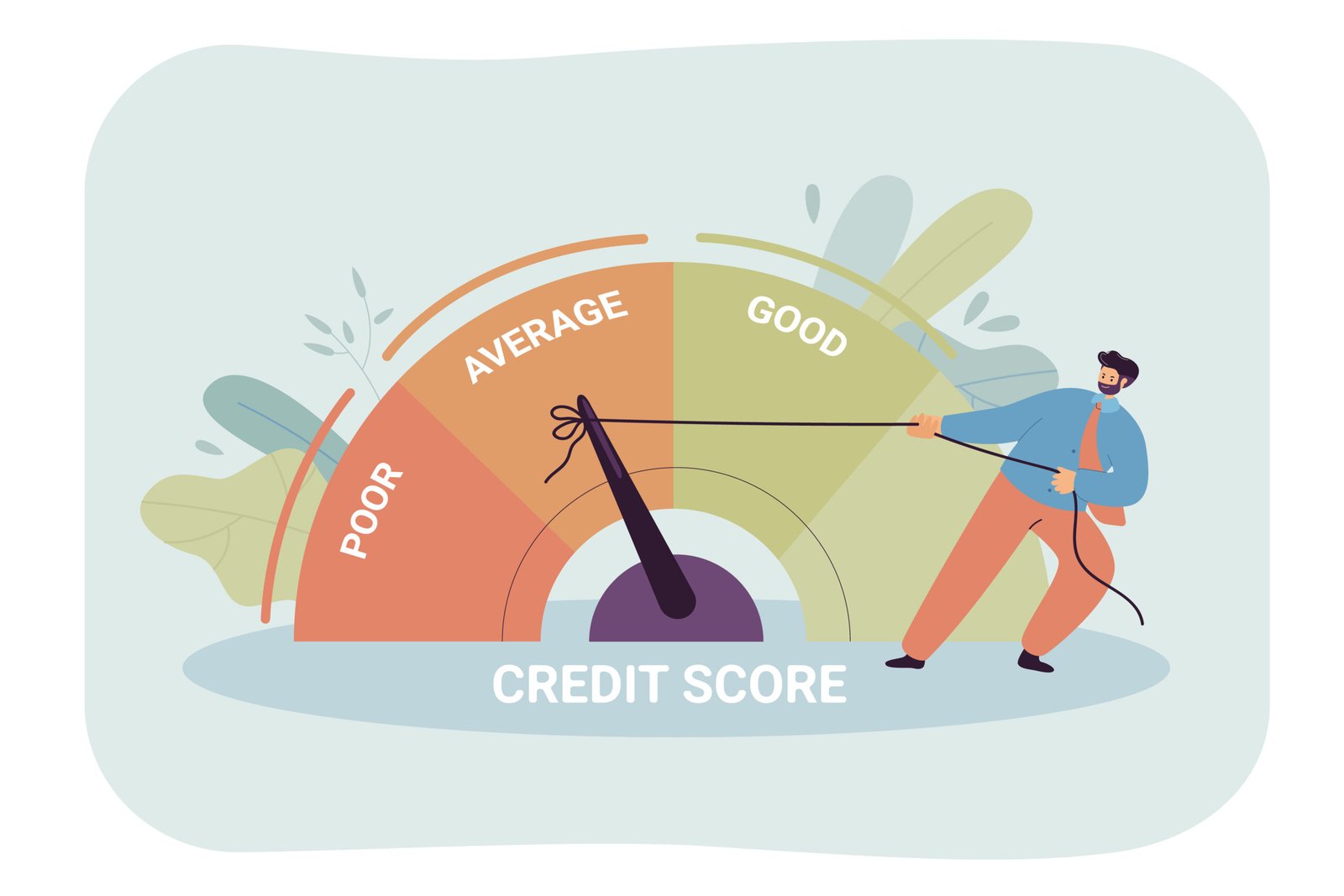
Your Credit Score Dropped Overnight For No Reason — Here’s Exactly Why and How to Fix It Fast

Why Your Credit Score Dropped Suddenly — And How to Fix It Fast in 2026
You checked your credit score this morning, and it dropped. No missed payments. No new debt. No idea what happened. Sound familiar?
That sinking feeling when you see a lower number staring back at you is one of the most confusing moments in personal finance.
You’ve been responsible. You’ve paid your bills. You haven’t done anything wrong — at least not that you’re aware of. Yet there it is. A credit score that’s suddenly lower than it was last week.
Here’s the thing most people don’t realize. A sudden credit score drop is almost always explainable. And once you know the reason, it’s almost always fixable — often within a single billing cycle.
Let’s break down exactly what happened and what you need to do right now.
The Most Common Reasons Your Score Dropped
Your Credit Utilization Spiked
This is the single most overlooked reason for a sudden credit score drop — and it catches responsible people off guard all the time.
Credit utilization is the percentage of your available credit that you’re currently using. If you have a $10,000 credit limit and carry a $3,500 balance, your utilization is 35%.
Here’s where it gets counterintuitive. Even if you pay your credit card in full every month — which is exactly what you should be doing — your score can still take a hit from high utilization.
Why? Because your card issuer reports your balance to the credit bureaus on your statement closing date, not your payment due date. So if you charged $4,000 to a $10,000 limit card this month and your statement closed before you paid it off, the bureaus saw a 40% utilization — even though you paid every penny on time.
Experts recommend keeping utilization below 30% at all times. Below 10% is even better for maximizing your score. This single factor accounts for 30% of your total credit score calculation.
A Hard Inquiry Hit Your Report
Every time you apply for a new credit card, loan, mortgage, or car financing, the lender pulls your credit report. This is called a hard inquiry, and it leaves a mark.
Each hard inquiry typically drops your score by 5–10 points. One inquiry is manageable. Multiple applications in a short window — say, applying for three credit cards and a personal loan in the same month — can stack up quickly and send your score noticeably lower.
Hard inquiries stay on your report for two years, but only affect your score for the first 12 months. After that, their impact fades completely.
One important exception worth knowing — when you’re rate shopping for a mortgage, auto loan, or student loan, multiple inquiries within a 14–45 day window are typically counted as a single inquiry by the scoring models. The bureaus understand you’re comparing rates, not desperately seeking credit.
An Account Was Closed
When a credit card account closes — whether you close it yourself or the issuer closes it due to inactivity — two things happen to your score simultaneously.
First, your total available credit decreases. This automatically raises your utilization ratio across all your cards, which hurts your score.
Second, if the closed account was one of your older accounts, it can shorten your average credit history length. Credit history length makes up 15% of your score. Losing an old account can have a surprisingly significant impact, especially if you don’t have many accounts.
This is why financial experts almost universally recommend keeping old credit cards open and occasionally using them for small purchases — even if you have no intention of carrying a balance.
A Late Payment Was Reported
This one stings because it feels unfair when it’s a simple oversight.
A payment that is 30 or more days past due gets reported to the credit bureaus. Even one late payment can drop your score 60–110 points, depending on how strong your credit was beforehand. Ironically, the higher your score is, the more a single late payment damages it.
A payment that’s only a few days late won’t appear on your report — creditors can only report payments that are a full 30 days overdue. But once that threshold is crossed, the damage is real and stays on your report for seven years.
If you just missed a payment and haven’t hit 30 days yet — act immediately. Pay it now. Call your creditor and ask them not to report it. Many will accommodate a first-time request.
A Credit Report Error Appeared
This is the reason that surprises people most — and it’s more common than the credit bureaus would like to admit.
Roughly one in five Americans has at least one error on their credit report, according to consumer advocacy research. These errors range from minor inaccuracies to serious problems like accounts that don’t belong to you, which can indicate identity theft.
Common errors include: payments incorrectly marked as late, accounts showing wrong balances, duplicate accounts appearing twice, or accounts belonging to someone with a similar name showing up on your report.
You won’t know unless you look.
How to Fix Your Credit Score Fast
Fix Utilization — Results Within One Billing Cycle
If high utilization caused your drop, this is the fastest fix available anywhere in personal finance.
Pay down your credit card balances as aggressively as possible. Get your utilization below 30% — and ideally below 10% — before your next statement closing date. Once the lower balance gets reported to the bureaus, your score will recover. This can happen within 30 days.
If you can’t pay down the balance quickly, call your card issuer and request a credit limit increase. A higher limit on the same balance immediately lowers your utilization percentage. Many issuers approve limit increases for customers with good payment histories with just a phone call or an in-app request.
Dispute Errors — Resolution Within 30 Days
Pull your free credit reports from all three bureaus — Equifax, Experian, and TransUnion — at AnnualCreditReport.com. You’re entitled to one free report from each bureau every year.
Go through every account, every balance, every payment history line by line. Flag anything that looks unfamiliar or incorrect.
File a dispute directly with the bureau by reporting the error through their online dispute portal. Under federal law, the bureau must investigate and respond within 30 days. Legitimate errors once confirmed are removed promptly, and your score adjusts accordingly.
Recover From Hard Inquiries — Automatic Over 12 Months
There is no fast fix for hard inquiries — but the good news is you don’t need one. Each inquiry’s impact on your score fades over the course of 12 months and disappears from your score calculation entirely after that.
The actionable lesson here is forward-looking. Be selective about credit applications going forward. Only apply for credit you genuinely need and intend to use. Avoid applying for multiple products in the same short window unless you’re rate shopping for a specific loan.
Recover From a Late Payment — Consistent Good Behavior Over Time
A late payment is the most damaging single event on this list and, unfortunately, the slowest to recover from.
The impact diminishes over time as you build a consistent record of on-time payments. Recent good behavior gradually outweighs older negative marks in the scoring model’s calculation.
Set up autopay for at least the minimum payment on every account immediately. This removes human error from the equation entirely. You can always pay more manually — but the autopay ensures you never accidentally miss a due date again.
How Long Does Full Recovery Actually Take?
Here’s an honest timeline so you know what to expect.
Utilization spike — Fix it before your next statement closes and your score recovers within one billing cycle. Typically 30 days.
Credit report error — File a dispute, and the resolution usually comes within 30 days. Score adjusts in the following reporting cycle.
Hard inquiry — No action needed. Impact fades over 12 months and disappears completely after 24 months.
Closed account — Utilization impact fixes as you pay down balances. History length impact fades gradually as your other accounts age.
Late payment — The mark stays for seven years, but its impact on your score diminishes significantly after 24 months of consistent on-time payments.
The common thread across every scenario is this — your credit score is not a permanent judgment. It is a living calculation that responds to your current behavior. Change the inputs, and the output changes with them.
The One Thing to Do Right Now
Before you do anything else, pull your credit report today.
You cannot fix what you cannot see. AnnualCreditReport.com gives you free access to all three bureau reports. It takes 10 minutes. Look for errors, unfamiliar accounts, and any late payments that shouldn’t be there.
Most people who do this for the first time find at least one inaccuracy. Some find serious errors that have been quietly damaging their score for months or years without them ever knowing.
Knowledge is the starting point. Everything else follows from there.
The Bottom Line
A sudden credit score drop feels alarming. In most cases, it is far more fixable than it appears.
High utilization corrects itself within a month once you pay down balances. Errors get disputed and removed. Hard inquiries fade on their own. Even late payments lose their sting over time with consistent responsible behavior.
Your credit score is not who you are. It is a number calculated from a specific set of inputs at a specific point in time. Change the inputs — pay down balances, dispute errors, stop applying for unnecessary credit, set up autopay — and the number follows.
You have more control over this than you think. Start with your free credit report today and work from there. One hour of attention now could save you thousands in interest rates and financial opportunities over the years ahead.
Pull your free credit report today at AnnualCreditReport.com. What you find might surprise you.
Abhishek Kandir is the founder and lead writer at Paisewaise, a personal
finance publication covering Indian markets, budgeting, and investing since 2023.
Abhishek’s work focuses on making complex financial topics — from RBI
Interventions to SIP strategies — understandable for everyday Indian readers
without a financial background.


[…] auto loan inquiries within that window count as a single hard inquiry on your credit report. Your credit score takes one small hit regardless of how many lenders you […]