

How to Budget on a $3,000 Monthly Income in the USA (Step-by-Step Guide)
Last Updated: March 2026 | Reading Time: 7 min |
Introduction
Managing money on a $3,000 monthly income in the USA is genuinely doable — but only if you have a clear plan. With the average American household spending more than they earn, a structured budget isn’t optional; it’s the difference between building financial stability and living paycheck to paycheck.
Whether you’re a recent graduate, a single-income household, or simply someone trying to reset their finances, this guide walks you through exactly how to budget on a $3,000 monthly income in the USA — step by step. You’ll learn how to split your money, handle fixed vs variable expenses, build an emergency fund, and still have room to breathe.
Start With What You Actually Take Home
Before building any budget, confirm your real take-home pay. A $3,000 monthly income could mean:
- $3,000 after taxes (net pay — what hits your bank account)
- $3,000 before taxes (gross pay — which nets closer to $2,400–$2,600 depending on your state and deductions)
For this guide, we assume $3,000 is your net monthly income.
Apply the 50/30/20 Budgeting Rule
The 50/30/20 budgeting rule is the most practical starting framework for a $3,000 income. It divides your money into three buckets:
| Category | Percentage | Monthly Amount |
|---|---|---|
| Needs (fixed essentials) | 50% | $1,500 |
| Wants (lifestyle spending) | 30% | $900 |
| Savings & Debt Repayment | 20% | $600 |
This rule was popularized by Senator Elizabeth Warren in her book All Your Worth and remains widely recommended by financial planners as a starting point for beginners.
What Counts as a “Need”?
- Rent or mortgage
- Utilities (electricity, water, internet)
- Groceries
- Transportation (car payment, gas, or transit pass)
- Minimum debt payments
- Basic insurance (health, renters/homeowners)
What Counts as a “Want”?
- Streaming subscriptions
- Dining out
- Gym memberships
- Shopping for non-essentials
- Entertainment
Important: On a $3,000 income in high cost-of-living cities like New York or San Francisco, the 50% needs bucket may not be enough. Adjust the ratio to 60/20/20 if necessary, and shrink your wants category first.
Build Your Monthly Expense Breakdown
Here’s a realistic monthly expense breakdown for someone earning $3,000 net in a mid-cost U.S. city (think: Columbus, OH; Charlotte, NC; or San Antonio, TX):
| Expense Category | Estimated Monthly Cost |
|---|---|
| Rent (1BR apartment) | $900 – $1,100 |
| Groceries | $250 – $350 |
| Utilities + Internet | $120 – $160 |
| Transportation (car or transit) | $150 – $250 |
| Health Insurance (if not employer-covered) | $150 – $300 |
| Phone Bill | $50 – $80 |
| Total Estimated Needs | $1,620 – $2,240 |
This is why choosing where you live is one of the most powerful financial decisions you can make on this income level. Rent alone can determine whether your budget survives or collapses.
Fixed vs Variable Expenses — Know the Difference
Understanding fixed vs variable expenses gives you control. Fixed expenses are predictable; variable ones are where most overspending happens.
Fixed Expenses (same amount each month):
- Rent/mortgage
- Car payment
- Insurance premiums
- Loan minimum payments
Variable Expenses (fluctuate month to month):
- Groceries
- Gas
- Dining out
- Clothing
- Entertainment
Why this matters: You can’t easily cut fixed expenses in the short term. Your leverage is almost entirely in your variable spending. Tracking these weekly — even with a simple notes app — creates awareness that naturally reduces overspending.
Case Study — How Maria Budgets $3,000/Month
Profile: Maria, 27, works in healthcare administration in Raleigh, NC. Take-home: $3,000/month. Single, renting.
| Budget Item | Monthly Amount |
|---|---|
| Rent (1BR) | $1,050 |
| Groceries | $280 |
| Utilities + Internet | $130 |
| Car insurance + gas | $210 |
| Phone | $65 |
| Total Needs | $1,735 |
| Dining out + entertainment | $300 |
| Clothing + personal care | $150 |
| Subscriptions (Netflix, Spotify) | $30 |
| Total Wants | $480 |
| Emergency fund | $300 |
| Roth IRA contribution | $200 |
| Extra debt payment | $285 |
| Total Savings/Debt | $785 |
| Grand Total | $3,000 |
Maria’s needs come in under 60%, she allocates 16% to wants (keeping lifestyle modest), and directs a strong 26% toward financial goals. She prioritized eliminating a credit card balance first before increasing retirement contributions.
Emergency Fund Planning on $3,000/Month
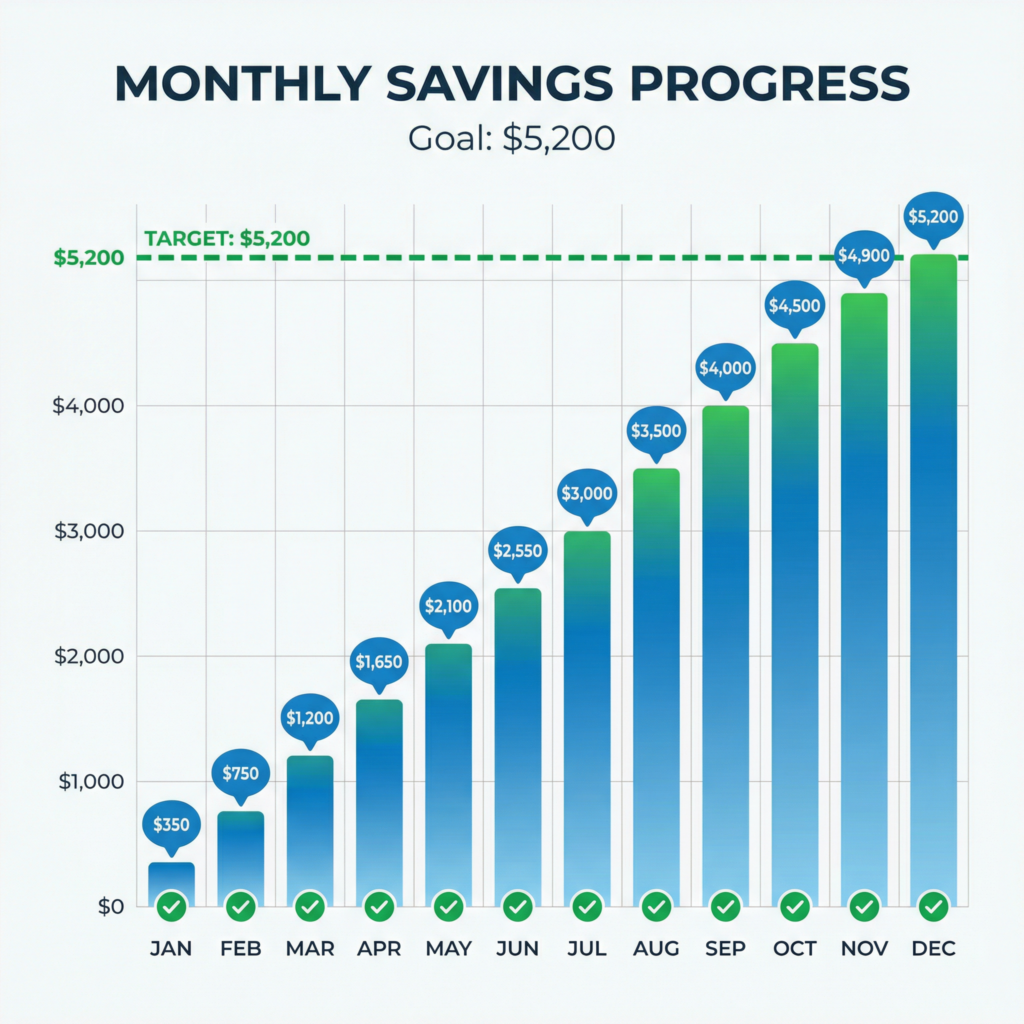
Emergency fund planning is non-negotiable. Financial experts generally recommend 3–6 months of essential expenses saved before focusing on other goals.
For Maria’s expense level ($1,735 in needs), that means:
- 3-month emergency fund target: ~$5,200
- 6-month emergency fund target: ~$10,400
On $300/month saved toward emergencies, Maria reaches her 3-month target in about 17 months — realistic and achievable.
Where to keep your emergency fund:
- High-yield savings account (HYSA) — currently offering 4.5–5.0% APY as of early 2026
- Separate from your checking account (out of sight, out of temptation)
- Never invest it — liquidity is the entire point
Saving Money on a Low Income — Practical Tips
Saving money on a low income requires prioritizing small, consistent actions over dramatic gestures.
Grocery savings:
- Meal plan weekly before shopping
- Buy store-brand products (saves 20–30% on average)
- Use apps like Ibotta or Fetch for cashback
Utility savings:
- Unplug idle electronics (phantom load can add $10–$20/month)
- Negotiate your internet bill annually — providers often have retention offers
Transportation:
- If you have a car, compare insurance rates every 6 months
- Consolidate errands into single trips to reduce gas costs
Subscription audit:
- List every recurring charge. Cancel anything unused for 30+ days.
- The average American pays for 4–5 streaming services simultaneously — most households actively use 2.
Common Budgeting Mistakes to Avoid
| Mistake | Why It Hurts | Fix |
|---|---|---|
| Budgeting from gross (pre-tax) income | Overestimates available money | Always budget from net pay |
| Forgetting irregular expenses | Blows the budget quarterly | Add a $50–$100/month “irregular expense” line |
| No emergency fund before investing | One crisis wipes out gains | Build a 1-month cushion first, then invest |
| Treating wants as needs | Leaves nothing to save | Categorize every expense honestly |
| Giving up after one bad month | Progress stalls permanently | Budget is a practice, not a test |
FAQs
Q. Can you realistically save on $3,000/month?
- Yes — but your city matters enormously. In mid-cost cities, saving $300–$600/month is realistic. In high-cost cities like NYC or LA, you may need to cut wants aggressively or find a roommate to make saving feasible at all.
Q. What if rent takes up more than 50% of my income?
- If rent alone exceeds $1,500, consider a roommate, a less central location, or negotiating your lease renewal. As a short-term bridge, temporarily reduce your wants category to 10–15% and maintain at least a $200/month savings habit.
Q. Is the 50/30/20 rule realistic for $3,000/month in 2026?
- It’s a starting framework, not a law. Many people on $3,000 need to run a 60/20/20 or even 65/20/15 split due to rising housing and grocery costs. The important thing is that savings never hit zero.
Q. How do I handle irregular income on a $3,000 average?
- Budget based on your lowest expected month, not the average. Any income above that floor gets allocated intentionally — to emergency fund first, then debt, then investing.
Q. Should I pay off debt or save first?
- Build a $500–$1,000 emergency starter fund first. Then aggressively pay down high-interest debt (anything above 7–8% APR). Once high-interest debt is cleared, split between savings and investing.
Final Thoughts
Budgeting on a $3,000 monthly income in the USA is not about deprivation — it’s about direction. The 50/30/20 rule gives you a framework. Understanding your fixed vs variable expenses gives you control. Building an emergency fund gives you resilience.
The biggest financial risk at this income level isn’t a single large expense — it’s the slow, invisible drain of untracked variable spending and no savings buffer. Start with a one-page budget, review it every Sunday for 60 days, and adjust as you learn your real patterns.
Small, consistent decisions compound. A $300/month savings habit over 10 years, invested at a modest 7% return, grows to over $52,000 — built entirely on a $3,000 income, one month at a time.
Sources
- U.S. Bureau of Labor Statistics — Consumer Expenditure Survey
- Federal Reserve — Report on the Economic Well-Being of U.S. Households
- FDIC — National Survey of Unbanked and Underbanked Households
This content is for informational purposes only and does not constitute financial advice. Readers should conduct independent research or consult a qualified financial professional before making financial decisions.

Abhishek Kandir is the founder and lead writer at Paisewaise, a personal
finance publication covering Indian markets, budgeting, and investing since 2023.
Abhishek’s work focuses on making complex financial topics — from RBI
Interventions to SIP strategies — understandable for everyday Indian readers
without a financial background.