
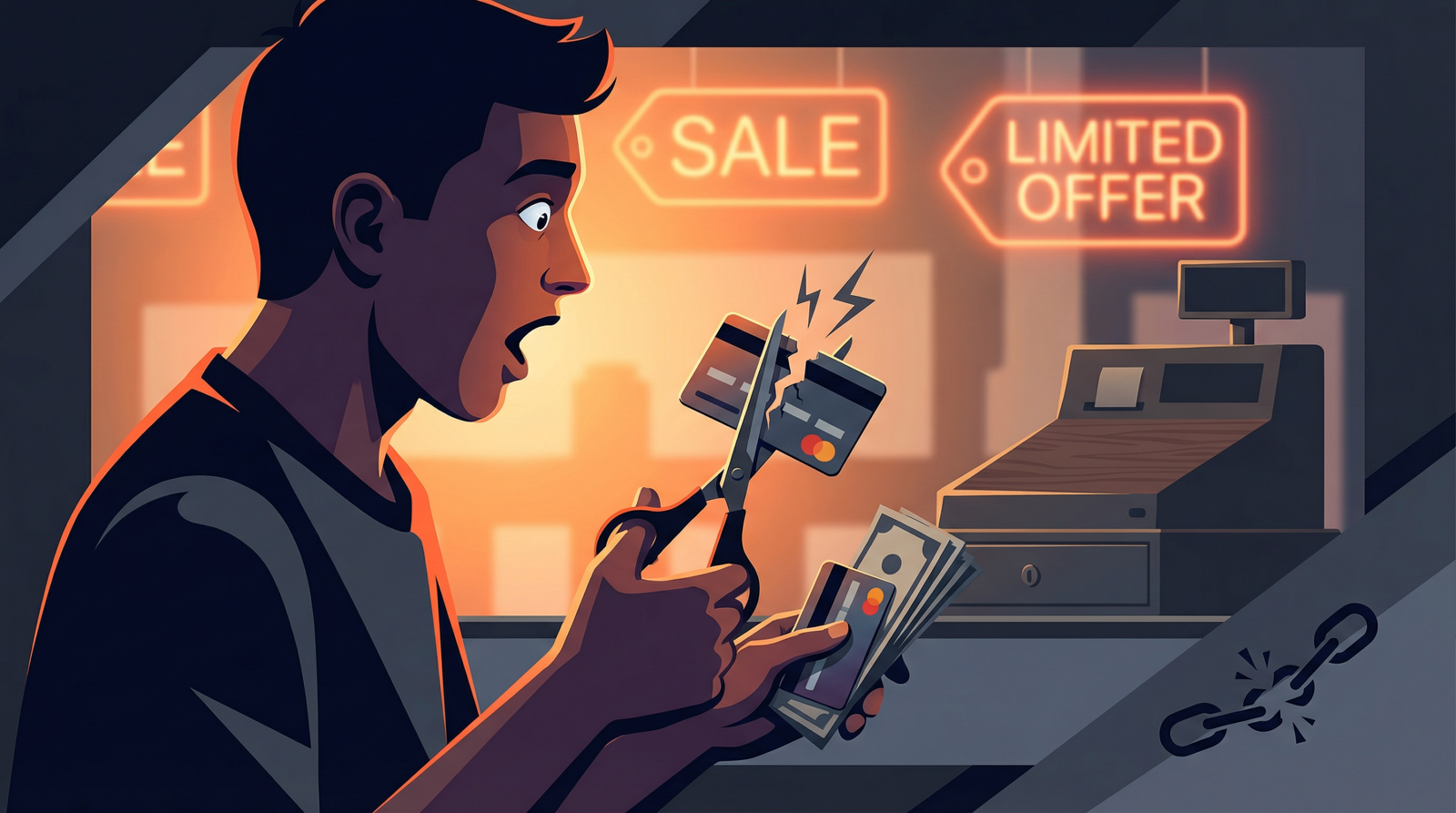
What Happened When I Stopped Using Credit Cards: A 90-Day Financial Experiment
I didn’t realize how much control credit cards had over my money—until I stopped using them.
For years, I juggled three credit cards, convincing myself I was “playing the system” with rewards points and cashback offers. But somewhere between chasing 2% back on groceries and auto-paying minimums, I lost track of something more valuable: financial awareness. Every month, I’d watch my balances creep upward despite having a decent income. The convenience of swiping had become a mental blind spot.
So I made a decision that seemed radical to my friends: I stopped using credit cards completely for 90 days. No backup card in my wallet. No “emergencies only” exception. Just debit, cash, and a healthy dose of curiosity about what would happen.
This is what I discovered about my spending habits, my stress levels, and whether you can actually thrive in modern life without plastic.
Why I Decided to Stop Using Credit Cards
The Breaking Point
The decision wasn’t purely financial—it was deeply emotional. My trigger moment came on a Tuesday evening when I opened my monthly statements. I had been carrying what I called “manageable” balances across three cards: $2,400, $1,800, and $950. Individually, none seemed alarming. Together, they represented $5,150 in debt that I couldn’t explain.
| Trigger Factors | My Reality |
|---|---|
| Monthly minimum payments | $245 total across three cards |
| Interest charges | $87/month on “managed” debt |
| Rewards earned | $23 cashback |
| Net loss | -$64/month |
I had convinced myself I was winning the credit card game, but the math told a different story. More troubling was the psychological pattern: I genuinely couldn’t remember what I’d purchased to create those balances. My spending had gone on autopilot.
The Emotional Weight
Beyond the numbers, something else bothered me. Every time my phone buzzed with a payment reminder, my stomach tightened. I’d developed what I later learned was “financial anxiety”—a low-grade stress about money that hummed constantly in the background. I was earning good money but never felt financially secure.
This wasn’t about being anti-credit card. I wasn’t declaring them evil or closing my accounts. This was a reset experiment: Could I break the autopilot spending cycle and rebuild my relationship with money?
The First Week Without Credit Cards: Early Reality Check
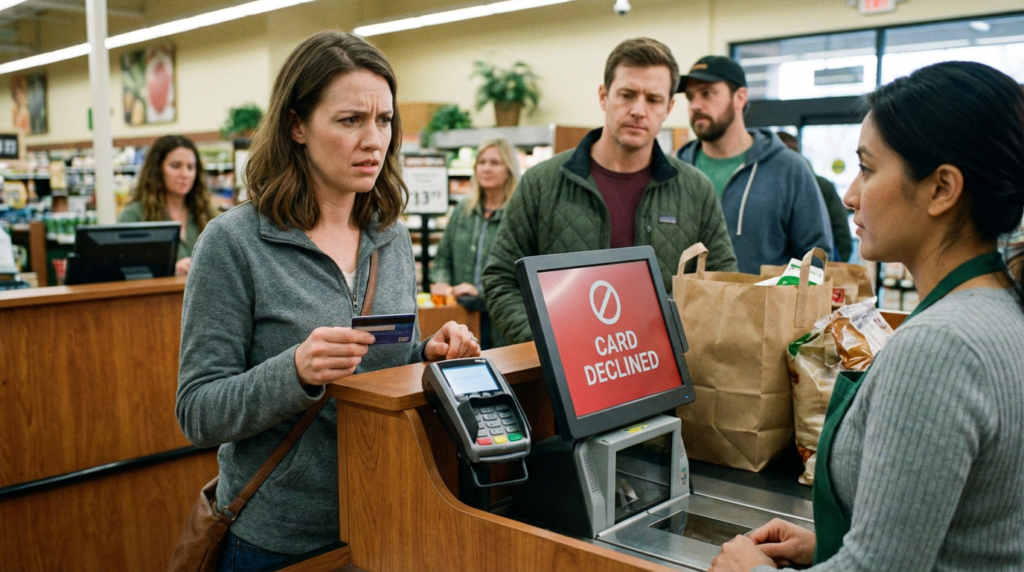
The first seven days after I stopped using credit cards were humbling.
Immediate Friction Points
- Forgotten subscriptions: My yoga studio membership bounced. So did Spotify Premium and my cloud storage. Apparently, I’d set up 11 recurring charges on cards I’d tucked away.
- Declined payments: I tried to prepay for gas using my debit card at the pump—something I’d never done—and the $125 hold temporarily freaked me out.
- The coffee shop moment: On Day 3, I stood at my favorite café, staring at a $6.50 latte. With my credit card, this was thoughtless. With my debit card showing my actual checking balance, I suddenly wondered if I needed it.
The Surprising Shift
What shocked me most wasn’t the inconvenience—it was the mental clarity. When I stopped using credit cards, every purchase became a real-time decision. I wasn’t promising future-me would cover it; I was spending money I actually owned right now.
That $6.50 latte purchase took me 45 seconds to decide. I bought it anyway, but I was present for the transaction in a way I hadn’t been in years.
By week’s end, I’d declined three impulse purchases and felt oddly empowered rather than deprived.
How My Spending Behavior Changed: The Core Shift
The Numbers Tell the Story
After tracking every transaction for 90 days, the data was clear:
| Spending Category | With Credit Cards (Monthly Avg) | After Stopping Credit Cards (Monthly Avg) | Change |
|---|---|---|---|
| Groceries | $520 | $485 | -6.7% |
| Dining Out | $340 | $195 | -42.6% |
| Online Shopping | $280 | $125 | -55.4% |
| Entertainment | $150 | $90 | -40% |
| Total Discretionary | $1,290 | $895 | -30.6% |
Did Impulse Purchases Decrease?
Absolutely. The friction of using a debit card created a critical pause. Here’s what changed:
Before (with credit cards):
- Saw something online → Added to cart → One-click checkout
- Average time from desire to purchase: 2 minutes
- Monthly micro-purchases (under $30): 23 transactions
After I stopped using credit cards:
- Saw something online → Added to cart → Had to manually enter debit info → Checked bank balance → Often abandoned cart
- Average time from desire to purchase: 24+ hours (or never)
- Monthly micro-purchases (under $30): 9 transactions
The Psychological Mechanism
The difference wasn’t about affordability—I could technically afford the same purchases with my debit card. The difference was visibility.
With credit cards, I spent “future money” that felt abstract. With my debit card, I watched my checking account balance drop in real-time. That $47 throw pillow on Amazon wasn’t just $47—it was the difference between having $843 or $796 available until payday.
What Happened to My Budget and Savings
Budget Simplification
When I stopped using credit cards, my budget transformed from theoretical to practical:
Old Budget Reality:
- Income: $4,200/month
- Fixed expenses: $2,400
- Credit card payments: $245
- “Available”: $1,555
- Actual spending: $1,780 (whoops, add to credit balance)
New Budget Reality:
- Income: $4,200/month
- Fixed expenses: $2,400
- Available: $1,800
- Actual spending: $1,650
- Leftover: $150
How Much Did I Actually Save?
This was the question I obsessed over. The answer surprised me:
| Financial Metric | Month 1 | Month 2 | Month 3 |
|---|---|---|---|
| Unexpected surplus | $87 | $143 | $168 |
| Interest NOT paid | $87 | $85 | $82 |
| Total “saved” | $174 | $228 | $250 |
Over 90 days, I saved approximately $652—not because I earned more, but because I spent more intentionally. More importantly, I didn’t accrue additional debt, which represented another $1,200 in avoided credit card balances.
Real Example: The Month-End Revelation
At the end of Month 2, something unprecedented happened: I had $143 still sitting in my checking account with three days until payday. For someone who’d been living paycheck-to-paycheck despite a good salary, this felt revolutionary.
I didn’t immediately spend it. I transferred it to savings and felt something I hadn’t felt in years: financial breathing room.
The Downsides No One Talks About
Where Not Having a Credit Card Hurt
I need to be honest: stopping credit cards wasn’t all financial enlightenment. There were genuine inconveniences:
Travel Nightmares
Hotel deposits: When I booked a hotel for a work conference, they wanted to place a $350 hold “for incidentals.” With my debit card, that meant $350 actually disappeared from my checking account for 5-7 business days. With a credit card, it would’ve been invisible.
Car rentals: Several rental companies flat-out refused debit cards or required proof of return flight, two forms of ID, and a credit check. What should’ve taken 10 minutes took 45.
Emergency Flexibility
In Month 2, my laptop charger died. My checking account had $240 until payday (3 days away), and the replacement cost $89. I could afford it, but it created genuine stress. My credit card would’ve absorbed this without thought.
Lost Protections
What I missed most:
- Fraud protection: Debit card fraud means my actual money disappears while the bank investigates
- Chargebacks: When a vendor didn’t deliver a product, disputing with a debit card was significantly harder
- Purchase protection: My credit card included 90-day purchase protection and extended warranties
- Price protection: Some cards refund price differences if items go on sale
Real Case Study: The Flight Booking Incident
I tried to book a last-minute flight to visit my sick father. The airline’s website initially accepted my debit card, then flagged it as suspicious and froze the transaction. Because it was tied to my checking account, I had to call my bank, verify my identity, unfreeze my account, and start over—adding 90 minutes of stress during an already difficult situation.
A credit card would’ve processed instantly.
What Happened to My Credit Score
The Uncomfortable Truth
Here’s what happened to my credit score when I stopped using credit cards:
| Timeframe | Credit Score | Change |
|---|---|---|
| Before experiment | 742 | Baseline |
| After 30 days | 738 | -4 points |
| After 60 days | 731 | -11 points |
| After 90 days | 728 | -14 points |
Why Did It Drop?
I paid all my bills on time, carried no new debt, and was objectively more financially stable. So why did my score decrease?
The reality: Credit scores don’t measure financial health—they measure how profitably you use credit.
- Credit utilization: My cards showed $0 activity, which algorithms interpreted as “not actively using available credit.”
- Account activity: Credit scoring models prefer regular usage and repayment
- Credit mix: Not using credit cards reduced my “diverse credit activity.”
Is It Bad for Your Credit Score to Stop Completely?
Yes, if your goal is to maximize your credit score. The system rewards active credit management, not financial prudence.
However, my score remained in the “good” range (680-739), which was sufficient for my needs. I wasn’t applying for a mortgage during this period, so the 14-point dip didn’t affect my life.
Important distinction: My score dropped despite better financial behavior. This taught me that credit scores measure creditworthiness for lenders, not actual financial wellness.
Did Life Feel Better Without Credit Cards? Mental Impact
The Stress Reduction
The mental shift was the most unexpected benefit of stopping credit cards.
Before:
- Checked my credit card apps 2-3 times daily with anxiety
- Dreaded monthly statement notifications
- Vague guilt about “spending too much” (without knowing specifics)
- Sunday scaries included money worry
After:
- Checked my bank balance once daily, calmly
- No surprise charges or interest fees
- Clear understanding of my financial position
- Significantly better sleep quality
Did I Feel More in Control?
Absolutely. Here’s a real journal entry from Day 47:
“Paid my rent, utilities, and groceries. My checking account shows $1,247 remaining. That’s not an abstract number on a statement I’ll deal with later—that’s my actual financial reality right now. For the first time in years, I know exactly where I stand.”
Quantifying the Mental Shift
While subjective, I tracked my financial anxiety using a simple 1-10 scale:
| Week | Financial Anxiety Level | Notes |
|---|---|---|
| Week 1 | 7/10 | Adjustment stress |
| Week 4 | 5/10 | Getting comfortable |
| Week 8 | 3/10 | Feeling in control |
| Week 12 | 2/10 | New normal |
The Confidence Factor
Spending only money I actually owned created an unexpected sense of dignity. I wasn’t borrowing from future-me anymore. Every purchase was funded by work I’d already completed, money I’d already earned.
This seemingly small shift profoundly changed how I felt about my financial life.
What This Experiment Taught Me: Essential Lessons
Lesson 1: Credit Cards Are Tools, Not Income Extensions
The most fundamental lesson from stopping credit cards: They’re not extra money. This sounds obvious, but my behavior suggested otherwise. I’d treated my $15,000 combined credit limit as an extension of my $4,200 monthly income.
The math that changed my perspective:
- Credit limit: $15,000
- Interest rate (average): 18.9%
- Cost of treating it like income: $2,835/year in interest
Lesson 2: Awareness Beats Rewards Every Time
I calculated my actual credit card rewards earnings:
| Period | Amount Spent on CCs | Rewards Earned | Interest Paid | Net Position |
|---|---|---|---|---|
| The year before the experiment | $38,400 | $547 | $1,044 | -$497 |
I was losing money while convinced I was gaming the system. When I stopped using credit cards, I earned $0 in rewards but paid $0 in interest and spent $3,950 less overall.
Lesson 3: Discipline Matters More Than Financial Products
The credit cards weren’t the problem—my lack of discipline was. But here’s what I learned: The right financial products can support discipline or undermine it.
For me, credit cards had undermined discipline by:
- Creating psychological distance from spending
- Enabling autopilot purchases
- Rewarding volume over intentionality
Lesson 4: Can You Be Financially Successful Without Using Credit Cards?
Yes, but with caveats.
Success I achieved without credit cards:
- Paid off $1,200 in existing debt
- Saved $652 in 90 days
- Reduced spending by 30%
- Eliminated financial anxiety
Challenges that remained:
- Travel logistics were harder
- Credit score optimization is impossible
- Some modern transactions require cards
- Emergency flexibility reduced
The honest answer: You can be financially healthy without credit cards, but modern American life is designed around them.
Would I Use a Credit Card Again? The Balanced Conclusion

The Honest Answer: Yes, But Differently
After 90 days of stopping credit cards, I reintroduced them—but with strict rules that maintain the lessons I learned:
My New Credit Card Framework:
✅ Use ONE card only (closed two accounts)
✅ Pay in full, automatically, every month (no exceptions)
✅ Track spending in real-time (as if using debit)
✅ Set a mental spending limit ($800/month maximum)
✅ Review every transaction weekly
✅ Never finance a purchase (if I can’t pay it off immediately, I can’t afford it)
Who Should Try Stopping Credit Cards Temporarily?
This experiment isn’t for everyone, but consider it if:
- You carry month-to-month balances
- You can’t explain where your money goes
- You experience financial anxiety
- Your credit card spending exceeds your checking account spending
- You’ve never used only cash/debit for 30+ days
Who should keep using credit cards:
- Those who genuinely pay in full monthly
- People who track every transaction already
- Frequent travelers who need protections
- Anyone building credit responsibly
The Hybrid Approach I Recommend
Rather than binary thinking (all credit cards vs. no credit cards), I now advocate for:
- 90-day credit card fast: Reset your relationship with spending
- Reintroduce strategically: One card, clear rules, automatic full payment
- Maintain debit card awareness: Mentally spend as if using your checking account
- Regular audits: Quarterly review of whether credit cards serve you or vice versa
Final Takeaway
Stopping credit cards didn’t make me richer—but it made me smarter with money.
The experiment revealed that my financial problems weren’t about income (which was adequate) or even about credit cards themselves (which are neutral tools). My problems stemmed from mindless spending enabled by psychological distance from my money.
When I stopped using credit cards, I was forced to close that distance. I became intimately aware of every dollar entering and leaving my life. That awareness—not the absence of plastic—transformed my finances.
Now, I use a credit card again, but I’m wielding the tool rather than being wielded by it. Every swipe carries the same weight it would if I were handing over cash. The convenience remains, but the autopilot is permanently disabled.
Your move: You don’t have to stop using credit cards forever. But could you do it for 30 days? Just to see what happens?
The results might surprise you.
Key Statistics from My 90-Day Experiment
| Metric | Result |
|---|---|
| Total spending reduction | 30.6% |
| Amount saved | $652 |
| Debt paid off | $1,200 |
| Credit score change | -14 points |
| Financial anxiety reduction | 7/10 to 2/10 |
| Impulse purchases avoided | 42 transactions |
| Interest saved | $254 |
Have you tried stopping credit cards, even temporarily? What did you discover about your spending habits?
FAQs
Q. Is it good to stop using credit cards completely?
- Stopping credit cards can reduce overspending and financial stress, but it may negatively impact your credit score if you stop all credit activity.
Q. What happens to your credit score if you stop using credit cards?
- Your credit score may stagnate or dip slightly because credit scoring models reward active, responsible credit usage.
Q. Did stopping credit cards help save money?
- Yes, many people spend less without credit cards because they become more intentional and avoid impulse purchases.
Q. Is living without credit cards stressful?
- Initially, yes. But over time, many experience less financial anxiety because they only spend money they already have.
Q. Can you survive financially without credit cards?
- Yes, but it can be inconvenient for travel, online subscriptions, and emergencies where credit flexibility is useful.
Q. Should everyone try a no-credit-card challenge?
- Not everyone, but it can be a powerful reset for people struggling with overspending or credit card debt.

Abhishek Kandir is the founder and lead writer at Paisewaise, a personal
finance publication covering Indian markets, budgeting, and investing since 2023.
Abhishek’s work focuses on making complex financial topics — from RBI
Interventions to SIP strategies — understandable for everyday Indian readers
without a financial background.

[…] a Credit Card Refund […]