
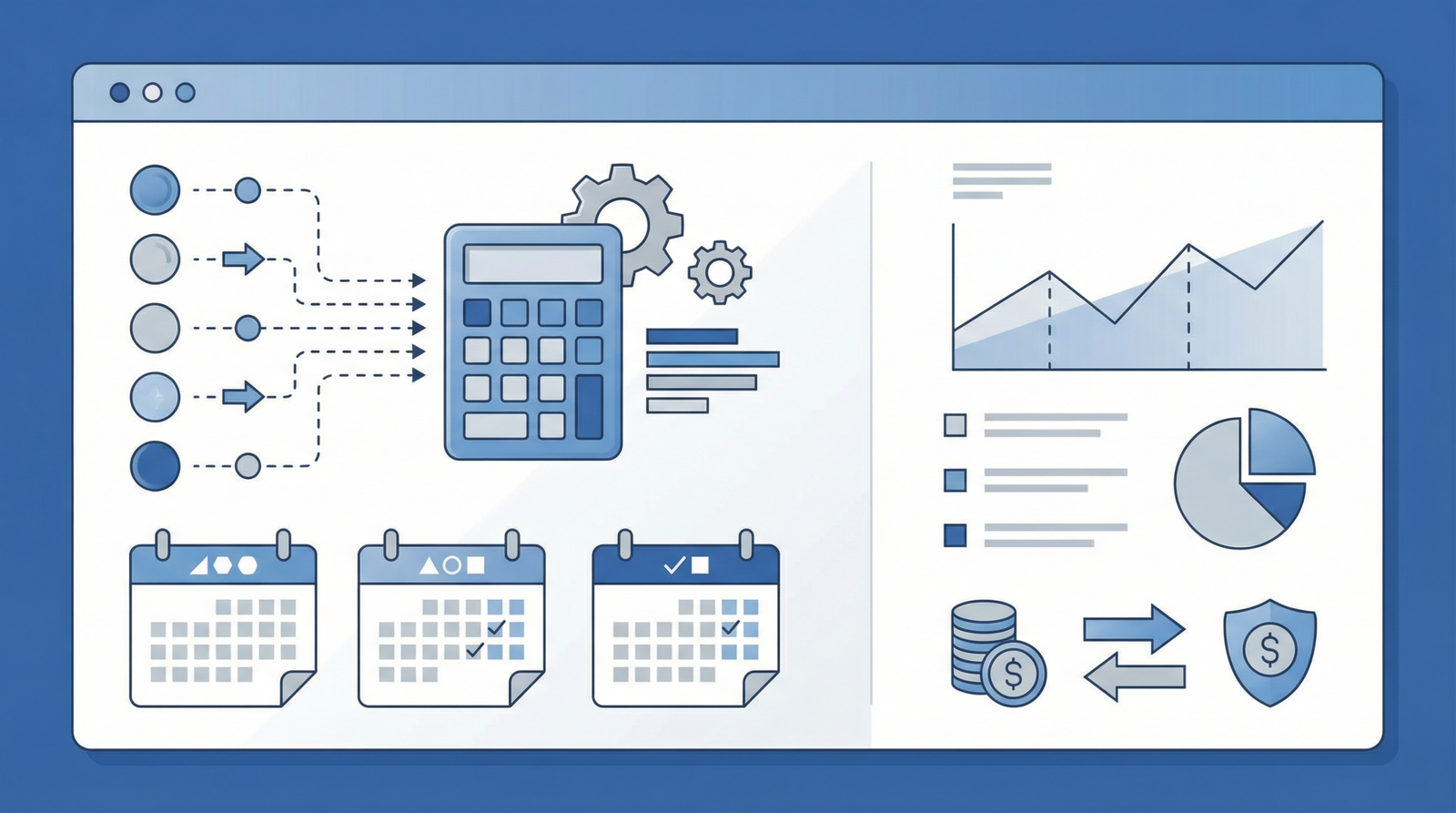
Introduction: Why Average Monthly Balance Matters
The average monthly balance is one of the most important internal metrics U.S. banks use to manage savings and checking accounts. While customers often focus on the balance they see in their mobile app, banks rely on average balance data to decide whether fees apply, whether interest is earned, and whether an account qualifies for certain benefits.
Understanding how banks calculate average monthly balance internally can help consumers avoid unexpected charges and manage their accounts more effectively. This article explains how daily balances are tracked, how banks convert that data into a monthly average, and how the result is used behind the scenes.
What Is Average Monthly Balance?
The average monthly balance is the average amount of money held in an account over a full statement cycle, typically one calendar month. Instead of looking at a single day’s balance, banks consider every day in the cycle.
This metric is commonly used to:
-
Determine minimum balance compliance
-
Apply monthly maintenance fees
-
Decide interest eligibility
-
Evaluate customer relationship value
Average Monthly Balance vs Average Daily Balance
| Metric | What It Measures | How It Is Used |
|---|---|---|
| Average Daily Balance | Average of daily ending balances | Interest calculation |
| Average Monthly Balance | Average balance over the entire month | Fees and eligibility |
Although the calculations are similar, the purpose differs. Average daily balance focuses on interest, while average monthly balance is more often tied to fees and account rules.
How Banks Track Daily Balances Internally
Before a bank can calculate, it must accurately track daily balances for every account.
Daily Balance Tracking Process
U.S. banks use core banking systems to record balances at the end of each business day. These systems capture:
-
Posted deposits and withdrawals
-
Interest accruals
-
Fees and adjustments
-
Balance holds and releases
Transaction cut-off times play a key role. Transactions posted after the daily cut-off are included in the next day’s balance, even if the customer initiated them earlier.
Treatment of Pending Transactions
Pending transactions usually do not affect the daily balance used for calculations until they officially post.
How Banks Calculate Average Monthly Balance Internally
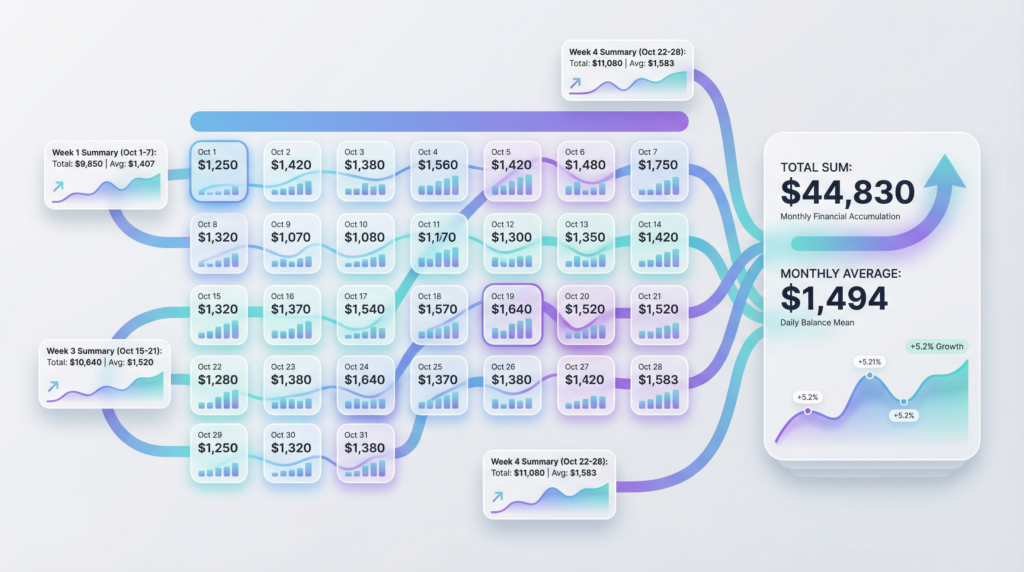
Once daily balances are recorded, banks follow a standardized internal process to calculate.
Step-by-Step Internal Calculation
| Step | Description |
|---|---|
| 1 | Record the ending balance for each calendar day |
| 2 | Add all daily ending balances together |
| 3 | Divide the total by the number of days in the cycle |
| 4 | Store result for fee and eligibility checks |
Key Details Banks Account For
-
Months with 28, 30, or 31 days
-
Statement cycles that do not align with calendar months
-
Partial months for newly opened or closed accounts
The process is fully automated, allowing banks to calculate average monthly balance across millions of accounts with minimal error.
How Banks Use Average Monthly Balance
It is not just a reporting metric—it directly affects customer costs and benefits.
Common Uses in U.S. Banks
| Use Case | Impact on Customer |
|---|---|
| Minimum balance rules | Determines fee waivers |
| Monthly maintenance fees | Triggers or avoids charges |
| Interest eligibility | Confirms qualification |
| Relationship pricing | Unlocks bundled benefits |
If an account falls below the required threshold, fees may apply even if the balance is high on the last day of the month.
Edge Cases and Special Scenarios
Certain situations require banks to adjust how the balance is calculated.
Common Special Scenarios
-
New accounts: Calculated using only active days
-
Account closures: Averaged up to the closure date
-
Dormant accounts: Still subject to calculation
-
Balance holds: Included if posted, excluded if pending
Corrections may occur if errors are identified after the initial calculation.
Regulatory Requirements in the U.S.
Banks must follow strict disclosure and compliance standards when using the average monthly balance.
Key Regulatory Framework
-
Truth in Savings Act (Regulation DD)
-
Clear disclosure of calculation methods
-
Transparent fee structures
-
Advance notice of rule changes
While the calculation itself is internal, the method must be disclosed clearly to consumers.
Common Customer Misunderstandings
Many consumers misunderstand how it works.
Frequent Points of Confusion
| Misunderstanding | Reality |
|---|---|
| “My balance was high at month-end.” | Daily averages still matter |
| “Pending transactions count.” | Only posted transactions count |
| “One low day doesn’t matter.” | It affects the average |
| “Alerts reflect final balance.” | Alerts are real-time, not averaged |
Understanding these nuances helps prevent surprises.
How Consumers Can Avoid Fees Using This Knowledge
Knowing how it is calculated allows consumers to plan better.
Practical Strategies
-
Maintain a buffer above the required minimum
-
Monitor daily balances, not just month-end balances
-
Set low-balance alerts
-
Use automatic transfers to stabilize balances
-
Choose accounts with flexible or no minimums
Even small changes in daily balance management can significantly improve compliance.
Conclusion: Key Takeaways
The average monthly balance is a foundational metric in U.S. banking. Banks calculate it by tracking daily balances, averaging them over the statement cycle, and applying the result to fees, interest, and account eligibility. While the process happens internally, its impact on consumers is very real.
By understanding how the average monthly balance works, you can avoid unnecessary fees, protect your interest earnings, and choose savings accounts that better match your financial habits.
Also Read – How Savings Account Withdrawal Limits Work
FAQs
Q. What is the average monthly balance in a U.S. bank account?
- Average monthly balance is the average amount of money kept in a bank account over a full statement cycle. U.S. banks calculate it by adding each day’s ending balance and dividing by the number of days in the month.
Q. How is the average monthly balance different from the average daily balance?
- Average daily balance is mainly used to calculate interest, while average monthly balance is typically used to determine minimum balance compliance, monthly fees, and account eligibility. Both rely on daily balances, but they serve different purposes.
Q. Do pending transactions affect average monthly balance calculations?
- No. Pending transactions usually do not count toward the average monthly balance until they officially post to the account. Only posted transactions are included in the daily ending balance used for calculations.
Q. What happens to the average monthly balance if an account is opened or closed mid-month?
- For accounts opened or closed mid-month, banks calculate the average monthly balance using only the days the account was active. The total of daily balances is divided by the number of active days in the statement cycle.
Q. How can I avoid fees related to average monthly balance requirements?
- You can avoid fees by maintaining a buffer above the required balance, monitoring daily balances instead of month-end balances, setting balance alerts, or choosing savings accounts with no minimum balance requirements.

Abhishek Kandir is the founder and lead writer at Paisewaise, a personal
finance publication covering Indian markets, budgeting, and investing since 2023.
Abhishek’s work focuses on making complex financial topics — from RBI
Interventions to SIP strategies — understandable for everyday Indian readers
without a financial background.

[…] Also Read – How Banks Calculate Average Monthly Balance Internally […]