
Introduction: Why Saving Money Feels Hard (But Is Possible)
You know that feeling when payday arrives, and you promise yourself, “This time I’ll save something”? And then two weeks later, you’re checking your bank account, wondering where it all went?
You’re not alone. Most Americans live paycheck to paycheck—not because they’re bad with money, but because saving money feels impossible when rent is due, groceries cost more every month, and life keeps throwing unexpected expenses your way.
Here’s the truth: learning how to save money is hard. The system isn’t designed to make it easy. Credit cards are everywhere, subscription services auto-renew without asking, and that “treat yourself” culture is real. But here’s the other truth: it’s absolutely possible to learn how to save money, even if you’ve never done it before, even if your income feels too small, even if you’ve tried and failed a dozen times.
This guide is not about deprivation or extreme budgeting. It focuses on practical, realistic strategies for saving money that work for real people living real lives in the USA. Whether you earn minimum wage or a solid salary, are a student, or support a family, you will discover effective ways to save money.
What this guide covers:
- How to save money and build your first savings habit from scratch
- Practical ways to save money from every paycheck
- How to save money through budgeting methods that actually stick
- How to save money fast when you need to
- How to save money by cutting expenses without feeling miserable
- Long-term strategies for how to save money for future goals
If you have been putting off learning to manage your finances because it feels overwhelming, this is your starting point. There is no judgment and no impossible expectations—just practical, real help.

How to Start Saving Money (Even If You Have Never Saved Before)
Let’s tackle the biggest mental block first: “I’ve never been able to save before, so why would this time be different?” Learning how to save money when you’re starting from zero requires a fresh approach.
This time, you’re not relying on willpower alone—you’re creating a system to save consistently.
How do I build a savings habit if I have never saved before?
Start so small it feels almost silly. Seriously. If you’ve never managed to save before, don’t set a goal to save $500 next month. Start with $5. Start with $10. At first, the amount doesn’t matter—the habit is what counts.
Here’s how to build the habit of saving:
Week 1: Choose one specific trigger to save money. “Every time I get paid, I transfer $10 to savings before I do anything else.” That’s it. That’s the whole habit.
Week 2: Keep doing it. Don’t increase the amount yet. Just prove to yourself you can master saving twice in a row.
Week 3-4: Still $10. You’re building trust with yourself. Each successful week is proof that you can save.
Month 2: Now you can increase if you want. Maybe $15, maybe $20. But only if it feels comfortable. Slow, steady progress that sticks is better than aggressive goals that quickly fall apart.
How to start saving money monthly
Saving each month effectively works best when it’s automatic and effortless. Here’s an approach that works for beginners:
- Open a separate savings account (ideally at a different bank than your checking account, so you don’t see it constantly)
- Set up automatic transfer for the day after payday—this is crucial for saving consistently
- Don’t touch it for three months, no matter what (unless it’s a genuine emergency)
Why three months? Because that’s when saving starts to feel normal. That’s when your brain adjusts to living on slightly less, and you stop noticing the difference.
How to save money with low income
This is the hardest situation for saving money, and anyone who tells you it’s easy is lying. When you’re barely covering basics, traditional advice on saving money feels insulting.
But here’s what is possible when learning how to save money with a limited income:
The $1-a-day method to save money: Can you find $1 a day? That’s $365 a year. It sounds small, but it’s $365 more than zero, and it proves that saving money is possible for you.
Saving money with your “extra” income: Got a tax refund? Cash birthday gift? Overtime pay? Transfer half to savings before you mentally spend it. This is a powerful strategy to save money quickly.
Use every assistance available: Food banks, community resources, government programs—these aren’t failures, they’re tools to save money. The money you save on groceries through a food pantry can go into savings.
Focus on percentages: Instead of “I need to save $200 a month,” think “I’m going to save 2% of everything I make.” With a low income, that might be $30—but it’s sustainable, and that’s what matters when figuring out how to save money.
The truth about saving money with low income is that progress is slow. But slow progress is still progress. And every dollar you save is a dollar between you and disaster.
How to Save Money From Your Salary (Step-by-Step)
Your salary is your most powerful tool when learning how to save money—if you treat it right. Most people think of saved money as “what’s left over after expenses,” but that mindset is backwards.

How to save money from your salary
The game-changer is this: save before you spend. Not after. Before. This is the fundamental principle of saving money successfully.
Here’s exactly how to save money from your salary:
Step 1: Know your after-tax income (what actually hits your account)
Step 2: Decide your savings percentage—this determines saving effectively (start with 5-10% if you’re new)
Step 3: Set up automatic transfer to savings for the day your paycheck deposits—automation is the key
Step 4: Build your budget around what’s left
It feels scary at first because you’re forcing yourself to live on less. But here’s the secret: you’ll adjust faster than you think.
How much money should you save from each paycheck?
The honest answer about saving money from each paycheck depends on your situation, but here’s a realistic framework:
| Your Situation | Suggested Savings % for How to Save Money | Example (on $3,000/month take-home) |
|---|---|---|
| Just starting to learn how to save money / high debt | 3-5% | $90-$150/month |
| Building an emergency fund, mastering how to save money | 10-15% | $300-$450/month |
| Stable income, understanding how to save money well | 15-20% | $450-$600/month |
| High income or low expenses, an expert in how to save money | 20%+ | $600+/month |
These are guidelines, not rules. If 3% is all you can manage right now on your journey, that’s enough. You can always increase it later.
The Pay-Yourself-First Method
This is the most important concept in this entire guide. “Pay yourself first” means your savings goal is the first “bill” you pay each month—this is the cornerstone of learning how to save money successfully.
Why this approach works: Human psychology. We adapt our spending to our available money. If you see $3,000 in your account, you’ll spend like you have $3,000. If you see $2,700 (because $300 went to savings), you’ll spend like you have $2,700. This is the psychology behind saving money.
How to save money using this method:
- Decide on your savings amount
- Make it automatic (cannot stress this enough)
- Pretend that money doesn’t exist
- Live your life on what remains
After 2-3 months of practicing this way, you won’t even miss it. That’s not motivational talk—that’s genuinely how adaptation works.
Create a Budget That Actually Works
Most budgets fail. Not because people are lazy, but because the budget was unrealistic from the start.
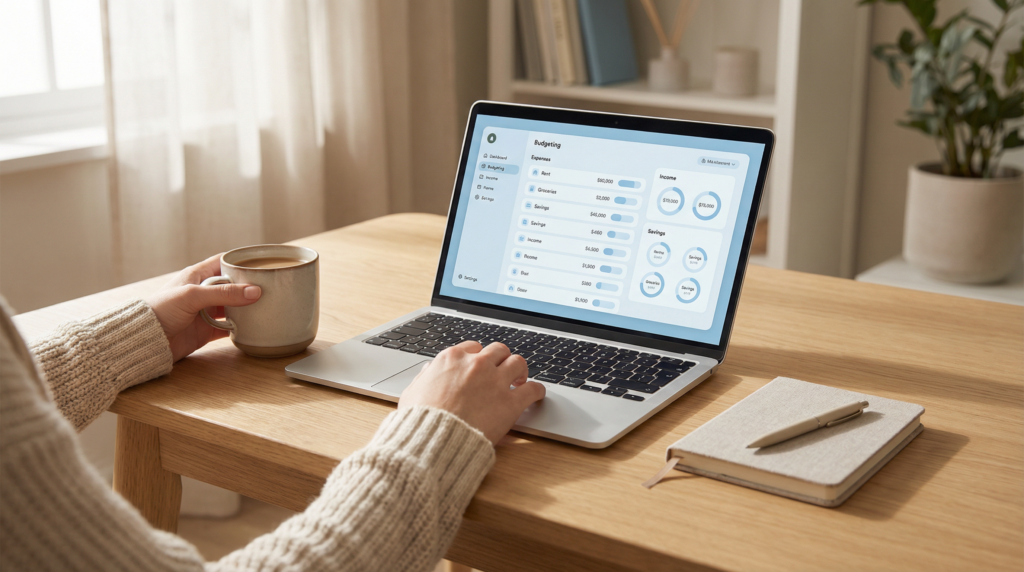
How to budget money
Here’s the truth about saving money through budgeting in America: your biggest expenses are probably rent/mortgage, transportation, and food. You can track every coffee purchase, but if those three things aren’t under control, mastering saving becomes nearly impossible.
Start with the big three:
Housing: Should be 30% or less of your income (though in high-cost areas, this is increasingly unrealistic, but do your best)
Transportation: Car payment + insurance + gas, or public transit costs
Food: Groceries + eating out—a major area that makes a difference
Get those three stable and predictable, and you’ve done 70% of the budgeting work.
Then add:
- Utilities
- Phone/internet
- Insurance (health, renter’s, etc.)
- Minimum debt payments
- Subscriptions
What’s left is for savings, extra debt payments, and discretionary spending. This framework is essential for saving money.
Is the 50/30/20 rule good for saving money?
The 50/30/20 rule is popular because it’s simple:
- 50% needs (rent, food, utilities, insurance, minimum debt payments)
- 30% wants (dining out, entertainment, hobbies, subscriptions)
- 20% savings and debt payoff—this is the core of saving money
Here’s the reality about using this: it’s a great starting framework, but it might not fit your situation perfectly.
| Budget Category | 50/30/20 Rule for How to Save Money | Reality Check |
|---|---|---|
| Needs (50%) | Rent, utilities, groceries, insurance, transportation | In high-cost cities, needs often take 60-70%, affecting how to save money |
| Wants (30%) | Entertainment, hobbies, dining out, subscriptions | If you’re in survival mode while learning how to save money, this might be 10-15% |
| Savings (20%) | Emergency fund, retirement, goals—the heart of how to save money | Start with 5-10% if 20% isn’t possible yet in your how to save money journey |
Use 50/30/20 as a goal to save money, not a requirement. If you’re currently at 70/25/5, that’s fine. Work toward 60/30/10, then 50/30/20 over time.
How to track expenses monthly
You don’t need a complicated system. You need a system you’ll actually use.
Option 1: The simple spreadsheet
- Download your bank statements
- Categorize expenses once a week (takes 10 minutes)
- Total each category at month-end
- See clearly where opportunities to save money exist
Option 2: Budgeting apps
- Mint, YNAB (You Need A Budget), EveryDollar, or PocketGuard
- They connect to your accounts and categorize automatically
- Warning: they’re only useful for saving money if you actually check them
Option 3: The receipt envelope method
- Keep every receipt for a month
- Sort by category on the 1st of next month
- See where your money actually went and identify saving opportunities
The best tracking method to save money is the one you’ll stick with. If apps stress you out, use pen and paper. If you love spreadsheets, make it detailed. There’s no “right” way to track saving money.
Common Mistakes People Make When Trying to Save Money
You’re going to make mistakes on your journey to save money. That’s not failure—that’s learning. But knowing the common traps can help you avoid some frustration.
Unrealistic saving goals
“I’m going to save $1,000 next month!” (When you’ve never saved before and make $2,500 a month)
This is self-sabotage disguised as ambition when learning to save. When you inevitably don’t hit that goal, you feel like a failure and quit entirely.
Better approach: Set a goal so achievable it feels almost boring. Save $50 next month. Then $50 the month after. Then maybe $75. Build momentum with wins, not guilt with misses.
Not tracking spending
You cannot master saving if you don’t know where it’s going. Period. This is the biggest obstacle to understanding.
That $8 lunch, $15 Uber, $12 subscription you forgot about, $40 impulse Target run—they’re invisible until you track them. Then there are glaringly obvious opportunities.
Spend one month tracking everything. You’ll be shocked. And that shock will motivate you.
Relying on willpower instead of systems
Willpower is a limited resource for saving money. You’ll be strong for a few days, maybe a week or two. Then you’ll be tired after work, stressed about something, and you’ll spend $30 on takeout without thinking.
Systems that beat willpower every time:
- Automatic transfers
- Separate savings account
- Unsubscribe from marketing emails
- Delete shopping apps
Make saving money the easy default, not the hard choice you have to make repeatedly.
Ignoring emergency savings
“I’ll save for [specific goal] first, then build an emergency fund.”
Then the car breaks down, and you have no emergency fund, so you put it on a credit card, and now you’re paying interest.
Start with emergency savings. Even $500 changes everything. Aim for $1,000, then one month of expenses, then three months. It’s boring, but it’s the foundation that keeps everything else from collapsing in your journey of saving.
How to Save Money Fast (Low Income & Urgent Situations)
Sometimes you need money NOW. Maybe your car registration is due, maybe you need to move, maybe you just want to feel less anxious about the $47 in your account.

How to save money fast on a low income
When you’re low-income, saving money fast requires aggressive temporary measures—things you can’t sustain long-term but can do for 30-60 days.
The 30-day sprint:
Week 1: No-spend challenge except absolute essentials (rent, utilities, groceries). No coffee shops, no takeout, no Amazon, no Target runs. Cook what’s already in your pantry. This is intense but effective and quick.
Week 2: Sell something. Old phone, clothes you don’t wear, furniture you don’t need, gift cards you won’t use. Facebook Marketplace, OfferUp, Poshmark—get cash fast.
Week 3: Pick up any extra work you can. Over time, gig work (DoorDash, Uber, TaskRabbit), freelance projects, anything. This week is about increasing income to accelerate saving, not just cutting expenses.
Week 4: Combine everything. Still not spending, still selling stuff if you have more, still working extra. Every dollar goes to your goal.
This is exhausting. This is not sustainable. But for 30 days, when you need to save fast? You can do almost anything for 30 days.
Save money living paycheck to paycheck
This is the hardest scenario, and if this is you, please know this: you are not failing—the system is failing you. But here is what you can control as you learn how to save money.
The micro-savings approach:
- Round up every purchase to the nearest dollar and transfer the difference to savings—a gentle way to save money method
- Save every $5 bill you get in cash—a physical reminder
- Transfer $1 a day (that’s $30 a month—little but real progress)
The breathing room strategy:
- Get one week ahead on bills (even if it takes 6 months)
- That one-week buffer makes everything less terrifying
- You’re no longer racing the due date
The side-income approach:
- Even $100 extra a month changes everything
- Dog walking, babysitting, tutoring, selling plasma, and online surveys
- It’s not glamorous, but it’s the difference between drowning and breathing
Simple Daily Habits That Help You Save Money Consistently
Big goals for saving money are motivating, but daily habits are what truly change your financial life and make saving automatic—showing you how to save money in a way that lasts.
These aren’t extreme. They’re small shifts for saving money that compound over time.
Simple ways to save money daily
Morning routine:
- Make coffee at home (saves $4-6 per day = $120-180/month)—simple win
- Pack lunch the night before (saves $10-15 per day = $200-300/month)—powerful strategy
Throughout the day:
- Wait 24 hours before any non-essential purchase
- Unsubscribe from one marketing email
- Check your bank balance
Evening routine:
- Transfer today’s “win” to savings (skipped buying lunch out? Transfer that $12)—immediate reward
- Plan tomorrow’s meals (prevents expensive last-minute food choices, essential for saving money)
- Review one subscription or recurring charge (cancel if you don’t use it)
Daily habits to save money
The replacement habit strategy:
Instead of just cutting things out—which can feel like deprivation—replace expensive habits with cheaper alternatives as part of learning how to save money.
| Expensive Habit | Replacement Habit for How to Save Money | Monthly Savings |
|---|---|---|
| Daily coffee shop ($5) | Home coffee ($0.50) | $135 |
| Lunch out ($12) | Packed lunch ($3) | $180 |
| New books ($15 each) | Library books (free) | $45 |
| Bottled water ($2/day) | Reusable bottle ($0) | $60 |
| Streaming 4 services ($50) | Rotate services ($15) | $35 |
That’s $455/month from five simple swaps.
Small changes that add up
The 1% improvement mindset:
You don’t need to overhaul your entire life to understand how to save money. You need to be 1% better than yesterday.
- 1% less spending = barely noticeable, but compounds over time
- 1% more awareness = you catch the waste before it happens
- 1% better planning = fewer expensive emergencies, smoother journey to save money
Examples through small changes:
- Use coupons for one item per grocery trip (not extreme couponing, just one coupon)
- Bring water from home instead of buying it once this week
- Drive 5 mph slower (better gas mileage, less wear on brakes)
- Unplug devices when not in use (slightly lower electric bill)
None of these will make you rich. But together, sustained over time, they create hundreds of dollars in breathing room.
How Students Can Save Money Effectively
Being a student in the USA is financially brutal. Tuition, books, rent, food—often with limited or no income.

How can I save money as a student
The student situation is unique because your income is often minimal or non-existent, but your expenses are unavoidable—making it especially important to learn how to save money early.
Textbook strategies:
- Rent instead of buy (save 70-90%)—crucial tactic
- Use library reserves when possible—a free option
- Share with classmates and split costs—a collaborative way to save money
- Sell back immediately after the semester ends—recovering costs
Food strategies:
- Meal plan if it saves money vs cooking (do the math on how to save money)
- Buy generic brands for staples—a simple way to save money
- Cook in bulk on Sundays—an efficient way to save money
- Use a student discount at groceries if available—how to save money with student status
Housing strategies:
- Roommates (annoying but necessary)
- Live slightly farther from campus for lower rent
- Sublet during the summer if you leave
- RA positions often include free housing—the ultimate way to save money on housing
Managing limited income
As a student learning how to save money, your income might come from:
- Part-time job
- Work-study
- Summer work
- Scholarships/grants
- Family support
- Student loans (which aren’t real income—they’re borrowed, not part of how to save money)
Priority list for limited student income:
- Rent and utilities
- Food
- Required academic expenses (books, fees)
- Transportation
- Small emergency fund ($300-500)—even students need to know how to save money for emergencies
- Everything else
Notice “savings” isn’t on that list. If you’re a student on a minimal income, your “savings” are your education—the investment in future earning potential. Don’t feel guilty about not having a robust savings account right now, but still practice basic how-to-save-money principles.
Student-specific budgeting tips
Use every student discount:
- Amazon Prime Student (half price)
- Spotify + Hulu bundle (student rate)
- Apple Music (student rate)
- Adobe Creative Cloud (60% off)
- Phone plans (many carriers offer student discounts)
- Gym memberships, museums, movies, transit passes
Take advantage of campus resources:
- Free gym (don’t pay for outside membership)
- Free counseling/health services
- Free printing (within limits)
- Free or cheap events for entertainment
- Career center for resume help (don’t pay someone)
The summer savings sprint:
If you work full-time in the summer, that’s your window to save money. Live like you’re still in school (minimal expenses) and bank as much as possible. That money carries you through the semester when you can’t work as much. This is a strategic way to save money for students.
How to Cut Monthly Expenses Without Sacrificing Your Lifestyle
Here’s the secret: cutting expenses doesn’t mean becoming miserable. It means cutting the things you don’t actually care about so you can keep the things you do.
What expenses should I cut first to save money?
Start with things you won’t miss.
The “didn’t even notice” cuts:
- Subscriptions you forgot you had—an easy way to save money
- Services you signed up for and never use
- Insurance, you’re overpaying for
- Bank fees (overdraft, ATM, monthly maintenance)
Go through your last 3 months of bank statements. Highlight every recurring charge. Ask yourself: “Did I use this? Do I even remember what this is?” This reveals how to save money opportunities.
The “easy substitution” cuts:
- Brand name → generic (same product, half the price)—simple way to save money
- New → used or refurbished
- Convenience → planning ahead
The “worth it” analysis:
For everything else in your how-to-save-money journey, ask: “Does this purchase give me joy/value worth the money?”
Netflix? Maybe yes. Cable with 200 channels you don’t watch? Probably no clear way to save money.
Do you use a gym membership 4 times a week? Yes. Do you use a gym membership twice a month? No, do YouTube workouts at home.
Expenses to cut immediately
Based on average American spending, here’s where most people can implement changes today to learn how to save money.
| Expense Category | Current Cost (avg) | How to Save Money Strategy | New Cost | Monthly Savings |
|---|---|---|---|---|
| Cable TV | $100/month | Cut, use streaming only | $15-30 | $70-85/month |
| Unused gym | $50/month | Cancel, use free options | $0 | $50/month |
| Eating out (15x/month) | $300/month | Cut to 8x/month | $160 | $140/month |
| Name-brand groceries | $600/month | Switch to generic for staples | $480 | $120/month |
| Car insurance | $150/month | Shop competitors annually | $110 | $40/month |
Total potential: $420-505/month
You don’t have to make all these cuts to save money. Pick two or three that feel easiest in your how-to-save-money journey.
Save money without a lifestyle change
The art of how to save money is finding cuts that don’t hurt.
Example 1: Entertainment
- Don’t cut: Watching shows and movies
- Do cut: Paying for cable
- Result: Same entertainment, $70/month saved—perfect way to save money
Example 2: Coffee
- Don’t cut: Morning coffee
- Do cut: Coffee shop daily
- Result: Make it at home, same coffee enjoyment, $100/month saved—delicious!
Example 3: Social life
- Don’t cut: Seeing friends
- Do cut: Always meeting at expensive restaurants
- Result: Host dinners, do free activities, same social connection, $80/month saved—social how to save money
The pattern for how to save money: keep the experience, change the delivery method.
How to Save Money on Essentials
You can’t cut food, housing, and transportation from your budget. But you can reduce what you pay for them through money-saving strategies.

How to save money on groceries
Groceries are one of the few expenses where you have real control over how to save money.
Store strategy for how to save money:
- Shop at Aldi, Walmart, or Costco for staples (30-50% cheaper than traditional grocery stores)—an effective way to save money
- Use store apps for digital coupons (Kroger, Safeway, Target)—a modern way to save money
- Buy store brand for everything except your few “must-haves”—smart way to save money
Shopping strategy for how to save money:
- Shop with a list (prevents impulse buying, protects how to save money efforts)
- Never shop hungry (you’ll buy everything, sabotaging how to save money)
- Check unit prices, not package prices—detailed how to save money
- Buy in-season produce—seasonal, how to save money
- Stock up when staples are on sale —a strategic way to save money
Realistic savings from how to save money on groceries:
- Average American family: $600-800/month on groceries
- With these how-to-save-money strategies: $400-550/month
- Savings from how to save money: $150-250/month
Meal planning basics for how to save money:
- Plan 5 dinners for the week—organized how to save money
- Intentionally repeat ingredients across meals—an efficient way to save money
- Cook double portions and freeze half—time-saving, how to save money
- Breakfast and lunch are mostly repetitive (and that’s fine for how to save money)
How to lower utility bills
Electric bill:
- Adjust thermostat by 2-3 degrees (you’ll adapt within a week)
- Unplug devices not in use (or use power strips)
- LED bulbs (they pay for themselves in 3-6 months)
- Close vents in unused rooms
- Wash clothes in cold water
Water bill:
- Shorter showers (use a timer if needed)
- Fix leaky faucets
- Run dishwasher and washer only when full
Internet/phone:
- Call and negotiate every year
- Threaten to cancel (they’ll transfer you to the retention team with better offers)
- Ask about competitor pricing
- Consider cheaper providers (Mint Mobile, Cricket, Visible)
Realistic impact:
- Electric: $15-30/month savings
- Water: $5-10/month savings
- Internet/phone: $20-50/month savings
- Total: $40-90/month
How to reduce transportation costs
Transportation is often the second-biggest expense after housing.
Car ownership costs:
- Insurance: Shop around every year, and increase deductibles if you have an emergency fund
- Gas: Use the GasBuddy app, combine errands, and drive smoothly (aggressive driving kills MPG)
- Maintenance: DIY simple things (air filters, wipers), use independent mechanics vs dealership
Alternative transportation:
- Work from home when possible
- Carpool
- Public transit (if available and practical)
- Bike for close errands
The car payment trap:
- Average new car payment in the USA: $700+/month
- Consider: a reliable used car paid in cash or a small loan
- A $15,000 used car vs $40,000 new car saves you $400+/month
How to Save Money Online (Digital-First Strategies)
The internet created spending temptations, but it also created saving opportunities.
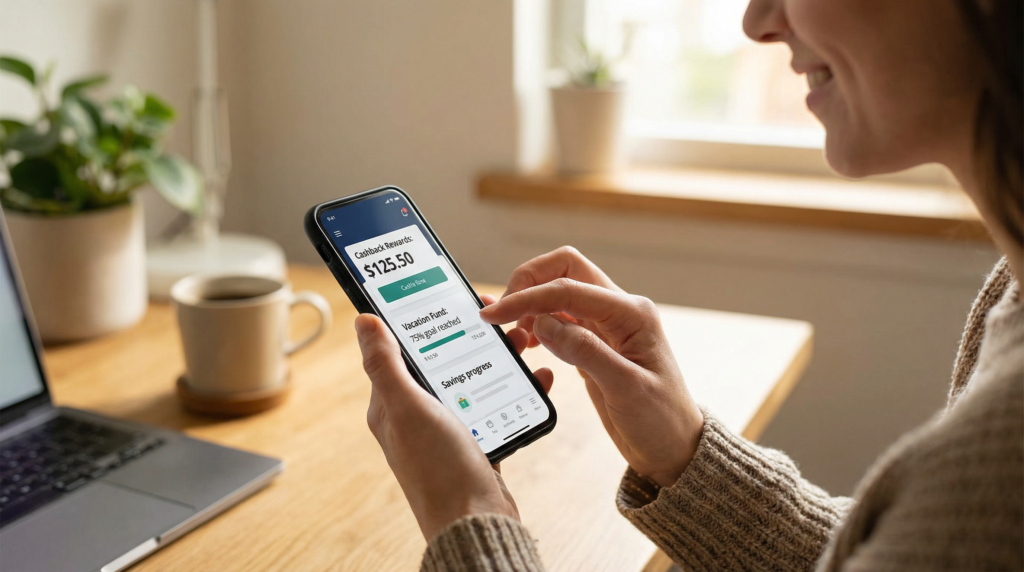
How to save money online
Browser extensions (install these today):
- Honey/Capital One Shopping: Auto-finds coupon codes at checkout
- Rakuten: Cash back on purchases you’re making anyway
- Keepa: Tracks Amazon price history (don’t buy until it drops)
Cash back apps:
- Ibotta: Groceries and everyday purchases
- Fetch Rewards: Scan any receipt, earn points
- Dosh: Automatic cash back on card purchases
These require zero extra effort. You’re buying things anyway—get paid for it.
Cashback apps and browser extensions
The trick is using them consistently without letting them tempt you into buying things you wouldn’t have bought.
Rules for using cashback tools:
- Only buy things already on your list
- Don’t buy something just because it has cashback
- Transfer cashback earnings straight to savings
- The goal is saving money, not “making” money by spending
Realistic earnings:
- Cashback on regular purchases: $15-40/month
- Coupon codes at checkout: $10-30/month
- Price tracking savings: $20-50/month
- Total: $45-120/month
Online budgeting and savings tools
Budgeting apps:
- Mint: Free, automatic tracking, budgeting tools
- YNAB (You Need A Budget): Paid but highly effective zero-based budgeting
- EveryDollar: Simple, beginner-friendly
- PocketGuard: Shows how much you can safely spend
Automatic savings apps:
- Digit: Analyzes spending and saves small amounts automatically
- Qapital: Saves based on rules you set (round-ups, guilty pleasures, etc.)
- Chime: Auto-save when you spend
High-yield savings accounts:
- Regular bank savings: ~0.01% interest (basically nothing)
- High-yield online savings: 4-5% interest
- On $5,000: that’s $200-250 per year instead of $0.50
Best high-yield options: Ally Bank, Marcus by Goldman Sachs, American Express Savings, Discover Savings
How to Save Money for the Future (Long-Term Planning)
Saving for next month is important. Saving for next year and beyond is how you build real financial security.
How to save money for future goals
Short-term goals (0-2 years):
- Emergency fund
- Vacation
- Holiday spending
- Small purchases (new phone, furniture)
Keep this money in: High-yield savings account (accessible but earning interest)
Medium-term goals (2-5 years):
- Car down payment
- Wedding
- Home down payment
- Career change fund
Keep this money in: High-yield savings or conservative investment (CD, bond fund)
Long-term goals (5+ years):
- Retirement
- Child’s education
- Financial independence
Keep this money in: Investment accounts (401k, IRA, brokerage with stock/bond mix)
Short-term vs long-term savings
The biggest mistake is keeping long-term money in regular savings (losing to inflation) or keeping short-term money in investments (at risk if you need it soon).
Match the timeline to the account type:
| Timeline | Best Account Type | Why |
|---|---|---|
| Under 1 year | High-yield savings | Accessible, no risk, some interest |
| 1-3 years | High-yield savings or CD | Locked rate, better than regular savings |
| 3-5 years | Savings or conservative mix | Slight growth potential, moderate safety |
| 5+ years | Investments (stocks/bonds) | Time to weather market ups and downs |
Don’t invest money you’ll need in the next 2-3 years. Markets fluctuate. If you need that money and the market is down, you’re forced to sell at a loss.
Automating savings
Manual saving fails because it requires perfect behavior forever. Automation removes the decision.
How to automate everything:
Paycheck split:
- Set up direct deposit to send X% to savings, rest to checking
- You literally never see the savings in money
Recurring transfers:
- Schedule automatic transfer from checking to savings every payday
- Set it and forget it
Round-up programs:
- Apps that round up purchases and save the difference
- $4.67 coffee → rounds to $5, saves $0.33
Goal-based automation:
- Separate savings accounts for different goals
- Auto-transfer to each: $100 to emergency fund, $50 to vacation, $75 to car fund
After 3-6 months of automation, check your checking account. Notice how you’ve adapted to living on less? That’s the power of removing the decision.
Goal-Based Saving Strategies
Saving feels more motivating when it’s for something specific.
How to Save Money for a Car
Step 1: Define your target
- What car? (Be realistic—reliable used car vs dream sports car)
- Total cost, including taxes, fees, and insurance increase
- Timeline (when do you need it?)
Example:
- Used reliable car: $15,000
- Down payment goal (20%): $3,000
- Timeline: 18 months
- Monthly savings needed: $167
Step 2: Adjust for reality
- Can’t save $167/month? Extend the timeline or lower the down payment target.
- Can you save more? You’ll reach your goal faster.
Step 3: Where to keep the money
- High-yield savings account
- Separate from emergency fund (different goal)
- Name the account “Car Fund” for motivation
Acceleration strategies:
- Sell current car closer to purchase date (if you have one)
- Birthday/holiday money goes straight to the car fund
- Side gig earnings dedicated to this goal
How to Save Money for a House
This is the biggest savings goal most people face.
Down payment reality check:
- Traditional advice: 20% down (avoids PMI)
- Reality: First-time buyers often do 3-10% down
- On $300,000 house: 3% = $9,000 | 10% = $30,000 | 20% = $60,000
The 3-year plan (example for $15,000 down payment):
- Year 1: Save $350/month = $4,200
- Year 2: Save $450/month = $5,400
- Year 3: Save $450/month =$5,400
Total: $15,000
Additional costs to save for:
- Closing costs: 2-5% of home price ($6,000-15,000 on $300k home)
- Moving expenses: $1,000-3,000
- Immediate repairs/furniture: $2,000-5,000
First-time homebuyer advantages:
- FHA loans (3.5% down)
- State/local first-time buyer programs
- Down payment assistance programs
- Tax credits in some areas
Where to keep house savings:
- Years 1-2: High-yield savings
- Year 3: Keep in savings (too close to need it for investing risk)
How to Save Money for Travel
Travel savings are about balancing the dream with the budget.
Budget travel breakdown:
- Domestic weekend trip: $500-800
- Week-long domestic: $1,500-2,500
- International economy: $3,000-5,000
- International comfortable: $5,000-8,000
The “sinking fund” approach:
- Decide annual travel budget: $3,000
- Divide by 12: $250/month
- Save monthly, spend on trips throughout the year
Travel-specific saving hacks:
- Credit card points (use responsibly—only if you pay in full)
- Travel during the off-season
- Book flights on Tuesday/Wednesday
- Use Airbnb vs hotels
- Eat like locals (markets, street food)
Cutting travel costs without cutting experiences:
- Shorter trips more often vs one big expensive trip
- Road trips instead of flights
- Stay slightly outside the main tourist areas
- Free walking tours, museums on free days
Emergency Savings: How Much Is Enough?
Emergency funds aren’t sexy. They’re not exciting. But they’re the difference between a financial inconvenience and a financial disaster.
How much emergency fund
The standard advice: 3-6 months of expenses
The reality: That’s overwhelming when you’re starting out. Build it in stages.
Stage 1: $500-1,000
- Covers: minor car repair, urgent medical copay, broken appliance
- Timeline: 2-4 months of aggressive saving
- This alone prevents most “small emergencies” from becoming credit card debt
Stage 2: $2,000-3,000
- Covers: major car repair, bigger medical bill, emergency flight home
- Timeline: 6-12 months
- You can breathe now
Stage 3: 1 month of expenses
- Calculate your monthly must-haves (rent, food, utilities, insurance, minimum debt payments)
- Save that amount
- Timeline: 1-2 years
- Covers: job loss buffer, major unexpected expense
Stage 4: 3-6 months of expenses
- This is full emergency fund territory
- Timeline: 2-5 years
- Covers: job loss, major life disruption, true emergencies
| Emergency Fund Level | Amount | What It Covers | Priority |
|---|---|---|---|
| Starter | $500-1,000 | Minor emergencies | Build first |
| Intermediate | $2,000-3,000 | Major one-time emergencies | Build second |
| One month’s expenses | Varies ($2,000-4,000 avg) | Short-term job loss, major expense | Build third |
| Full fund | 3-6 months expenses | Extended job loss, serious emergency | Build long-term |
How to save money for emergencies
Where to keep it:
- High-yield savings account
- NOT invested (you need it to be safe and accessible)
- Separate from regular savings (reduces temptation)
How to build it:
- Every windfall: tax refund, work bonus, cash gifts → 50-100% to emergency fund
- Debt snowball: When you pay off a debt, redirect that payment to emergency savings
- Auto-save: even $25-50/month adds up
When to use it:
- Job loss
- Medical emergency
- Essential car repair
- Urgent home repair
- Emergency travel (family illness, funeral)
When NOT to use it:
- Vacations (save separately for those)
- Wants and desires
- Non-emergencies you could plan for
Rebuilding after using the emergency fund becomes your top priority until it’s back to the previous level.
Saving Money While Paying Off Debt
This is the hardest balance. You need savings. You also need to get out of debt. How do you do both?
Should I save or pay debt first?
The honest answer: both, but strategically.
Priority order:
- Build a $1,000 emergency fund (prevents new debt)
- Pay minimums on all debt (protects credit, avoids fees)
- Attack the highest-interest debt aggressively
- Continue small savings contributions
- Once high-interest debt is gone, increase savings
Why $1,000 first? Because without it, the next emergency goes on a credit card, and you’re adding debt while trying to pay it off.
Save money while paying debt
The balanced approach:
Example budget on $3,500 take-home:
- Essentials: $2,500
- Debt minimums: $400
- Debt extra payment (highest interest): $400
- Savings: $100
- Discretionary: $100
Notice savings are still there, just smaller. You’re building the habit while demolishing debt.
Debt avalanche vs snowball:
Avalanche (mathematical best): Pay the highest interest rate first. Snowball (psychological best): Pay the smallest balance first for quick wins
Use whichever keeps you motivated. Math is useless if you quit.
When debt is paid off:
- Doesn’t lifestyle inflate
- Take that $800 debt payment and split it: $500 to savings, $300 to quality of life improvement
- In 18 months, you have $9,000 saved (plus your emergency fund)
The “pay yourself first” rule applies even with debt:
- Automate that small savings amount
- It proves you can save and pay off debt
- Psychological win that keeps you going
Automate, Track, and Grow Your Savings
You’ve learned the strategies. Now make them permanent.
How to automate savings
Complete automation setup:
Step 1: Paycheck split
- Contact HR or use your bank’s direct deposit form
- Send X% to savings account, rest to checking
- Never see the savings money
Step 2: Recurring transfers
- Log into savings account
- Set up an automatic transfer from checking
- Schedule for the day after payday
- Start small, increase gradually
Step 3: Round-up programs
- Link debit card to savings app
- Rounds up purchases, saves the difference
- Passive saving, you don’t notice
Step 4: Goal accounts
- Create separate savings accounts for each goal
- Auto-transfer specific amounts to each
- Visual progress on each goal
Result: Saving happens whether you remember or not, whether you feel motivated or not, whether you’re stressed or not.
Frequently Asked Questions (FAQ Section)
Q. How do Americans save money monthly?
- The average American who successfully saves uses automation and the pay-yourself-first method. They typically save 5-20% of their income by setting up automatic transfers the day after payday, before they can spend the money. Most successful savers keep their savings in a separate account and focus on building an emergency fund first before other goals.
Q. How to save money on rent USA?
- Rent is often the biggest expense. To save: consider roommates (can cut rent by 40-60%), live slightly farther from city centers or popular areas (20-30% cheaper), negotiate rent renewal (ask for a lower increase), look for income-restricted apartments if you qualify, or consider house-sitting or becoming a resident assistant. Moving to a cheaper place can save $200-600/month.
Q. What is the 50/30/20 rule in simple terms?
- The 50/30/20 rule divides your after-tax income into three categories: 50% for needs (rent, groceries, utilities, insurance, minimum debt payments), 30% for wants (dining out, entertainment, hobbies), and 20% for savings and debt payoff beyond minimums. It’s a guideline, not a rigid rule—adjust percentages based on your situation while keeping the priority order.
Q. How can I save $10,000 in a year?
- To save $10,000 in one year, you need to save $833 per month or about $192 per week. Make it achievable by: automating $833/month from your paycheck to savings, cutting major expenses (cheaper rent, eliminating car payment, reducing food costs by $300/month), and adding income through side work ($400-500/month). It requires discipline but is realistic for median-income earners.
Q. Is $1,000 a month good savings?
- Yes, $1,000/month is excellent savings by any standard. That’s $12,000 per year. For context, the median American household income is around $75,000, so $12,000 represents 16% savings rate—well above the national average of 3-5%. If you can maintain this, you’ll build substantial emergency funds and reach financial goals quickly. Most people would consider this exceptional.
Q. How much should I have in savings by age 30?
- Financial experts suggest having roughly one year’s salary saved by age 30, though many Americans don’t meet this benchmark. A more realistic target: $10,000-20,000 in accessible savings (emergency fund) plus any retirement accounts. Don’t be discouraged if you’re not there—starting now is more important than hitting arbitrary targets. Focus on building the habit and momentum.
Q. What are the biggest money-saving mistakes?
- The biggest mistakes are: not having an emergency fund (leading to debt cycles), lifestyle inflation when income increases, not tracking spending (can’t improve what you don’t measure), over-saving for the future while drowning in high-interest debt, and setting unrealistic goals that lead to burnout and quitting. Also, waiting to “earn more before saving” instead of starting with any amount now.
Q. Should I save money or invest it?
- Save first for: emergency fund (3-6 months expenses) and short-term goals (under 3-5 years). Invest for: retirement and long-term goals (5+ years out). The order should be: build emergency fund → pay off high-interest debt → save for near-term goals → invest for retirement → invest for other long-term goals. Never invest money you might need within 2-3 years.
Conclusion: Turn Saving Money Into a Long-Term Habit
Here’s what you need to remember from everything we’ve covered:
You don’t need to be perfect. You need to be consistent.
Saving $50 every month for a year beats saving $500 once and then nothing for 11 months. Small, sustained action beats intense bursts of effort every single time.
Progress over perfection. You’ll mess up. You’ll have months where you can’t save, or you dip into savings, or you overspend. That’s not failure—that’s being human. The only failure is giving up entirely.
Systems beat motivation. Motivation fades. Automate your savings so it happens whether you feel motivated or not. Remove the decision from your daily life.
Start where you are. Don’t wait until you earn more, until debt is gone, until life is less chaotic. Start with $5 if that’s all you’ve got. Start with 1% of your income. Start today, not Monday.
Key lessons recap
- Pay yourself first through automatic transfers
- Track your spending for at least one month—awareness changes everything
- Build an emergency fund before anything else—even $500 changes your life
- Cut expenses strategically—eliminate what you don’t care about, keep what you value
- Use tools and automation—apps, high-yield accounts, cashback programs
- Set specific goals—”save for a car” is more motivating than “save money.”
- Forgive yourself for mistakes—restart as many times as needed
One action to take today
Don’t try to do everything at once. Pick ONE thing from this guide and do it in the next hour:
Option 1: Set up automatic transfer of $25 (or any amount) to savings for your next payday
Option 2: Open a high-yield savings account and transfer your current savings there
Option 3: Download a budgeting app and connect your bank account
Option 4: Review last month’s bank statement and identify one expense to cut
Option 5: Create a separate savings account and name it after your goal
Just one. That’s all. One action creates momentum. Momentum creates progress. Progress creates confidence. Confidence creates more action.
You’ve got this. You really do. Thousands of people in your exact situation have built savings from nothing. There’s nothing special about them that you don’t have.
The only difference between them and you is that they started.
So start. Today. Right now.
Your future self will thank you.

Abhishek Kandir is the founder and lead writer at Paisewaise, a personal
finance publication covering Indian markets, budgeting, and investing since 2023.
Abhishek’s work focuses on making complex financial topics — from RBI
Interventions to SIP strategies — understandable for everyday Indian readers
without a financial background.